
|
|
|
|||||||||
 |
||||||||||
| Leonardo da Vinci (1452–1519) | ||||||||||
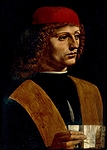
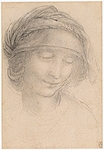
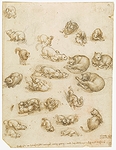
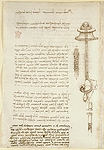
| Leonardo da Vinci, Italian painter, sculptor, architect, engineer, and thinker, was born in the Tuscan town of Vinci, near Florence. Raised by his lawyer father and peasant mother, Leonardo’s early years were shaped by both the rural landscapes of his birthplace and the intellectual vibrancy of Renaissance Florence. From a young age, his artistic talent was evident, but it was his insatiable curiosity—about nature, motion, form, and the workings of the human body—that truly defined him. Apprenticed to Andrea del Verrocchio, one of Florence’s leading artists, Leonardo quickly distinguished himself. His early paintings already hinted at the hallmarks of his style: exquisite attention to detail, subtle gradations of light and shadow, and a psychological depth rare among his peers. His Mona Lisa, with its elusive expression, and The Last Supper, capturing a charged moment of human emotion and divine revelation, stand among the most iconic images in Western art. Yet, Leonardo's interests were never limited to painting. He filled thousands of pages with notes and sketches, ranging from anatomical studies and botanical observations to complex inventions, architectural designs, and explorations of flight. He dissected human cadavers to better understand the structure of muscles, bones, and organs—efforts that contributed foundational knowledge to the study of anatomy. His mechanical drawings include prototypes for helicopters, tanks, gears, and bridges, many of which were centuries ahead of their time. Though many of his artistic and engineering projects remained unfinished, Leonardo’s notebooks reflect a mind in constant motion—restless, probing, and visionary. He approached the world not as a series of separate disciplines, but as a unified field where art, science, and nature were intimately connected. For Leonardo, drawing was not just a means of expression, but a tool of investigation. He observed with precision, questioned endlessly, and documented what he saw with unmatched clarity. Leonardo's legacy is not merely that of a master painter, nor even a Renaissance polymath, but of a singular figure whose curiosity and intellect broke the boundaries of his era. His death took place in Amboise. | ||||||||||
. |
||||||||||
| |
||||||||||








 |
||||||||||
|
|
||||||||||
| |
||||||||||
 |
||||||||||


 Art
Art