|


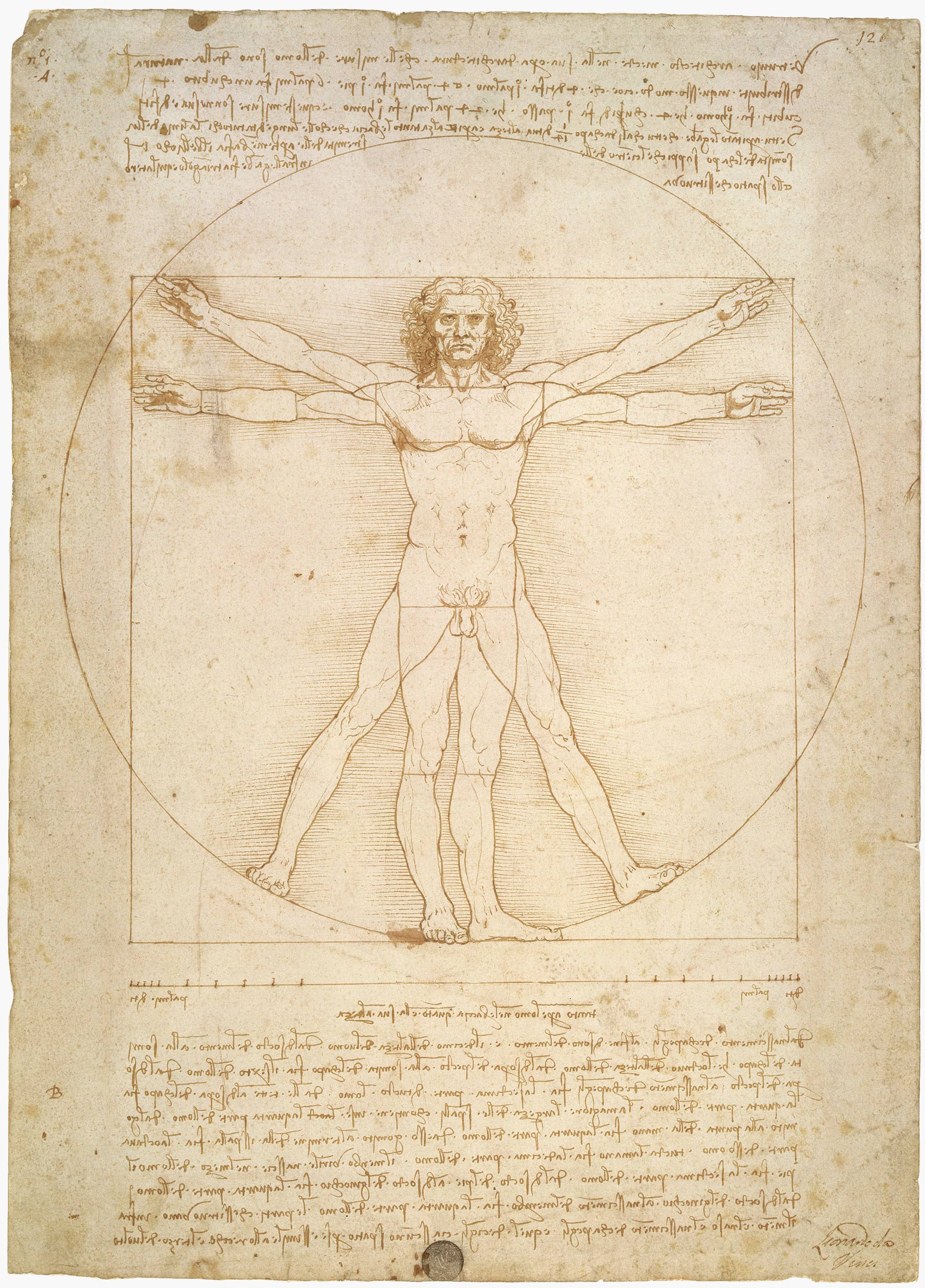
Vitruvian Man
Metalpoint, pen and ink, touches of watercolour on paper, 34.6 x 25.5
cm, by Leonardo da Vinci, c. 1492
Gallerie dell'Accademia di Venezia
Da Vinci gave the drawing the tile of The Proportions of the Human
Figure after Vitruvius. It depicts a nude male figure in two
overlapping poses. The figure's arms and legs are spread wide, fitting
perfectly within both a circle and a square. The drawing is accompanied
by da Vinci's notes that reference the work of Roman architect Vitruvius.
However, the precise measurements and poses also reflect da Vinci's own
anatomical studies and his belief in the connection between human form
and universal geometric principles. The title Vitruvian Man is a
later attribution given due to the drawing's clear connection to the
ideas of Vitruvius, particularly his writings on ideal human proportions in
his treatise De architectura. The drawing is considered a
landmark of Renaissance art and science, reflecting both artistic beauty
and scientific inquiry.

|
|
|