
|
|
|
|||||||||
 |
||||||||||
 |
||||||||||
 |
||||||||||
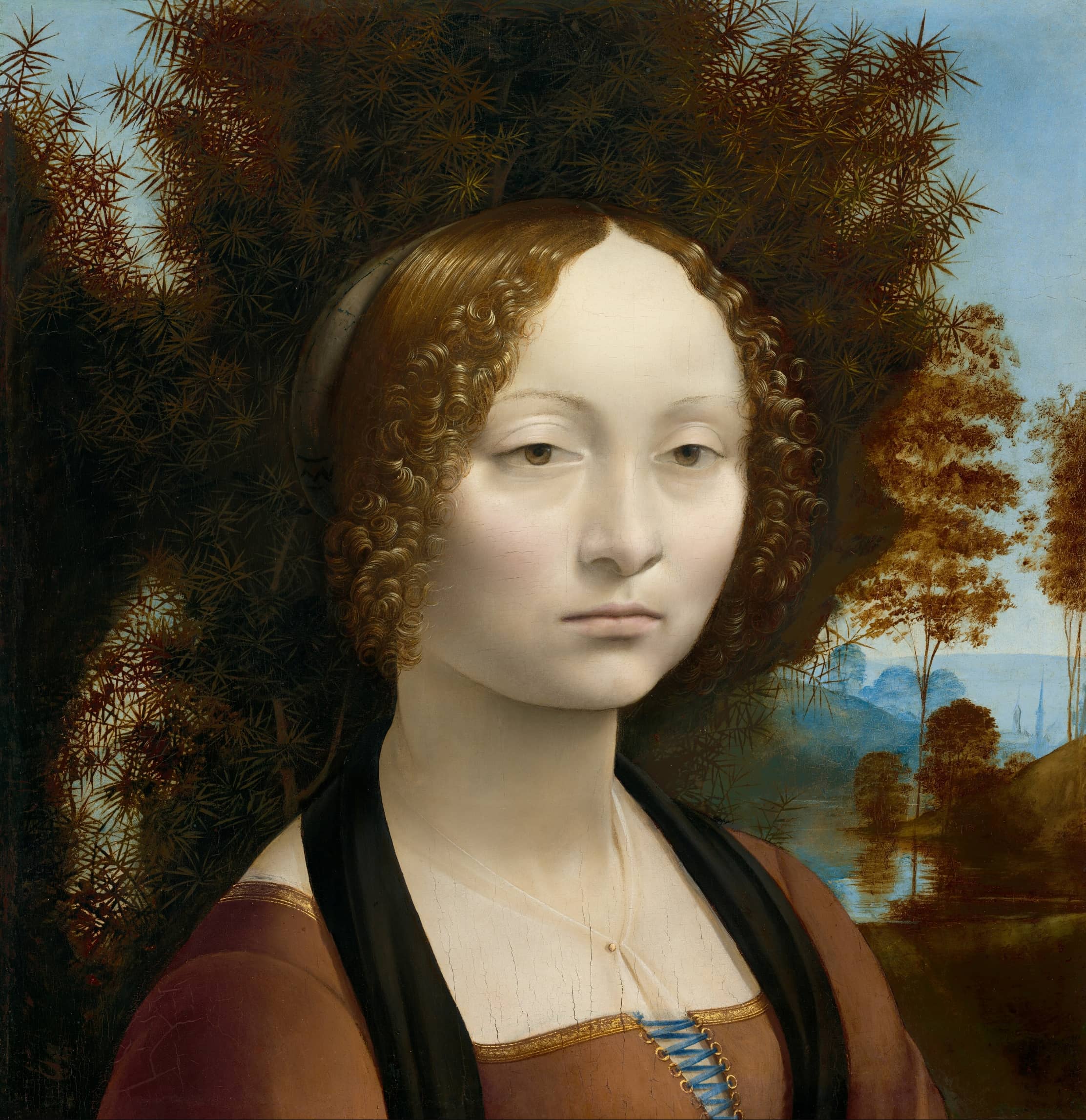
Ginevra de' Benci Oil on panel, 42.7 x 37 cm, by Leonardo da Vinci, 1474–78 National Gallery of Art, Washington |
||||||||||
|
A young, Florentine noblewoman, Ginevra de' Benci is depicted by Da Vinci in a revolutionary style. Breaking from the traditional profile view, Ginevra sits in a three-quarter pose, her gaze meeting the viewer's directly with a subtle hint of a smile. This innovative composition creates a captivating intimacy, a precursor to the enigmatic allure of the Mona Lisa. The meticulous details–from Ginevra's delicate features to the soft transitions of light and shadow on her face–display Leonardo's remarkable skill in capturing a lifelike image. The hazy landscape background, a stark contrast to the usual enclosed settings of the period, further emphasises his interest in naturalism and his pursuit of a more realistic portrayal, which was to transform Renaissance painting. The portrait was probably commissioned at the time of her marriage when she was sixteen. It is one example of Da Vinci's earliest experiments with the new medium of oil, and the appearance of wrinkles indicates that he was still learning. For unknown reasons, the panel was trimmed at the bottom, and Ginevra's hands were lost. An existing drawing of the panel shows her holding a sprig at her waist. The foliage of the juniper tree behind her would have been bright green, but it has turned brown with age. Juniper is a symbol of chastity, and the word in Italian, ginepro, also puns her name. |
||||||||||
 |
||||||||||
 |
||||||||||


