|
|
|
|||||||||
 |
||||||||||
| (3011) | ||||||||||
| Wolfgang
Amadeus Mozart
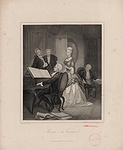
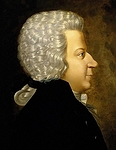
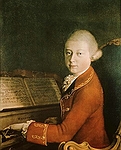
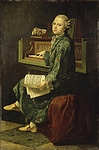
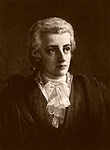
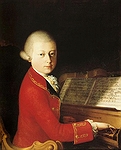
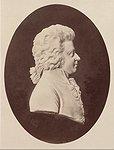
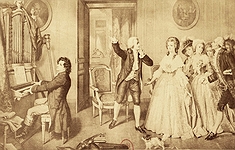
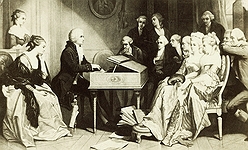
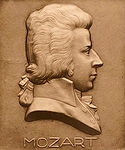
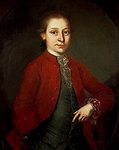
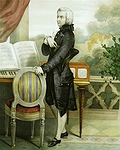
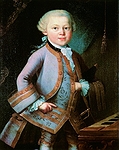
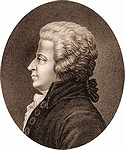
(1756–91) Other names: Johann Chrysostom Wolfgang Amadeus Biographical Knight of the Golden Spur [Vatican] Chapel master and organist to the Archbishop of Salzburg 1779–81 res. Chamber musician to Emperor Joseph II One of the most celebrated composers, Mozart began performing on the harpsichord at the age of about four and displayed an exceptional musical organisation. His first teacher was his father, who devoted much time to his education. At the age of six, he composed short pieces of music and was regarded as a prodigy of musical genius. He had a sister, four years older, who was an excellent musician in her early childhood. In 1762, Leopold Mozart took Wolfgang and his sister to Munich, where they performed before the court and received great admiration. They also visited Vienna, where they showcased their talents before the emperor and his family, who encouraged and praised them. In 1763, young Mozart amazed the Parisians with his performance on the organ and his improvisational skills. He travelled with his parents to the major cities of Germany and published two of his compositions in 1763. The Mozart family spent 1764 in London, where they gave public concerts. In 1766, they returned to Salzburg, where Wolfgang continued his studies, drawing inspiration from the works of Handel and Emanuel Bach. In 1768, he composed his opera La Finta Semplice, which was never performed. Accompanied by his father, he toured Italy in 1769 and 1770, receiving enthusiastic reception. He produced his opera Mitridate in Milan, which was performed successfully in 1770. During his visit to Rome, the pope knighted him. His next works were two serenatas: Ascanio in Alba and The Dream of Scipio. In 1773, he composed his opera Lucio Silla, which was very successful. He spent several years travelling, seeking employment in foreign countries without success. In 1779, he obtained positions as organist and chapel master to the Archbishop of Salzburg. At the request of the Elector of Bavaria, he composed Idomeneo in 1781, which surpassed his previous works and received immense applause. 'This work', says Denne-Baron, 'was nothing less than a complete transformation of the art.' He left the service of the archbishop, a crude and stingy person who required him to dine with his servants, and settled in Vienna in 1781. In 1782, he composed The Abduction from the Seraglio and married Constance Weber. He became a friend of Haydn. Mozart composed, with relentless activity and in rapid succession, symphonies, sonatas, quartets, motets, waltzes, and more. Around 1785, he composed Davide Penitente, an oratorio filled with remarkable beauties. His comic opera The Marriage of Figaro, composed in 1786, was performed with great enthusiasm, and in the opinion of some critics, marked a turning point in dramatic music. His masterpiece, Don Giovanni, was first performed in Prague in 1787. The King of Prussia offered him 3000 crowns per year to move to Berlin, but he declined, choosing instead to remain in the service of Emperor Joseph, who paid him only 800 florins. He often faced financial distress while living in Vienna. Among his later works is The Magic Flute of 1791. As a pianist, Mozart surpassed all German musicians of his time. His constitution was naturally delicate, and his health quickly deteriorated in 1791, the year he was commissioned to compose a requiem by a mysterious stranger, who wished to remain anonymous. This person was an agent of Count Walsegg. To Mozart's morbid imagination, this commission seemed like a warning of his own impending death. With this premonition, he composed his Requiem, considered his most sublime work. Place of birth: Salzburg Place of marriage: St Stephen's Cathedral, Vienna Place of death: Vienna St Marx Cemetery, Vienna Son of Leopold Mozart and Anna Maria Pertl, he married Constanze von Weber in 1782, and had issue. |
||||||||||
| |
||||||||||
| |
||||||||||
 |
||||||||||
|
||||||||||