|
|
|
|||||||||
 |
||||||||||
| (M14) | ||||||||||
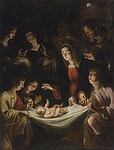
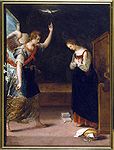
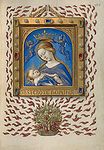
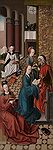
| Mary (fl. c. AD 25–c. AD 75) Other names: Virgin Mary, Mother of God, Our Lady of Angels, Queen of the Angels, Queen of Martyrs Biographical Mary is the mother of Jesus. At the time when the gospel history begins, she had her home in Galilee, at the village of Nazareth. Of her parentage nothing is recorded in any extant historical document of the 1st century; the genealogy in Luke 3. is manifestly that of Joseph. In early life she became the wife of Joseph and the mother of Jesus Christ; that she afterwards had other children is a natural inference from Matthew 1. 25, which the evangelists, who frequently allude to 'the brethren of the Lord', are at no pains to obviate. The few incidents mentioned in scripture regarding her show that she followed her son to the very end of his earthly career with unfailing motherliness, but the Magnificat assigned to her in Luke 1. is the only passage which would distinctly imply on her part a high prophetic appreciation of his divine mission. It is however doubtful whether Luke really intended to assign this hymn to Mary or to Elizabeth. The original text of Luke probably mentioned no name in introducing the Magnificat; scribes supplied the ambiguity by inserting, some Mary, others Elizabeth. It is doubtful which represents the intention of the writer: there is perhaps more to be said for the view that he meant to assign the Magnificat to Elizabeth. Mary was present at the Crucifixion, where she was commended by Jesus to the care of the apostle John (John 19. 26, 27), Joseph having apparently died before this time. Mary is mentioned in Acts I. 14 as having been among those who continued in prayer along with the apostles at Jerusalem during the interval between the Ascension and Pentecost. There is no allusion in the New Testament to the time or place of her death. Mary is said to be a cousin of St Elizabeth, mother of John the Baptist. Place of birth: possibly Sepphoris in Galilee Place of death: possibly Jerusalem or Ephesus Daughter of St Joachim and St Anne, according to the apocryphal Gospel of James. |
||||||||||
| |
||||||||||
| |
||||||||||
 |
||||||||||
|
||||||||||