|
|
|
|||||||||
| St
Elisabeth
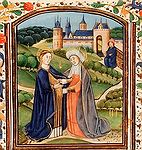
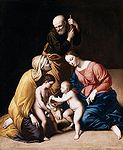
(1st century) Biographical Elisabeth (Greek, from Hebrew, meaning 'God is my oath') was the wife of the priest Zacharias, and the mother of John the Baptist. The name, in this precise form, does not appear in the Old Testament, where few female names are recorded, but it is a Hebrew name—essentially the same as Elisheba. Elizabeth emerges in the Gospel of Luke as a figure of quiet strength, deep faith, and prophetic insight. A descendant of Aaron, she lived a devout and blameless life, though burdened by barrenness in old age—a condition then viewed as a source of shame. During Zechariah’s priestly service in the Temple, the Archangel Gabriel appeared to him with the astonishing promise that Elizabeth would bear a son, whose name was to be John, and who would play a unique role in preparing the way for the Lord. Soon after, Elizabeth conceived and withdrew from public life in awe and gratitude. Her pregnancy is closely linked with that of her young cousin Mary, the mother of Jesus, who, after receiving her own angelic annunciation, travelled to visit Elizabeth in the hill country of Judah. Their meeting, known as the Visitation, became one of the most memorable scenes in Christian tradition: Elizabeth, filled with the Holy Spirit, greeted Mary as ‘the mother of my Lord’, and the child in her womb leapt for joy—an early sign of John’s prophetic vocation. Though some traditions attribute the hymn of the Magnificat to Elizabeth rather than Mary, both women are seen as instruments of God’s redemptive plan, sharing a profound spiritual understanding of the extraordinary roles their children would play. At John’s birth, it was Elizabeth who insisted, against family expectations, that the child be named John, affirming divine instruction and defying custom with quiet authority. Later legends suggest that she fled with her son during the Massacre of the Innocents, hiding in a cave said to have opened miraculously to protect them, with angels sustaining them in their refuge. The village of Ein Karem, traditionally identified as her home, has long been a site of pilgrimage, housing shrines such as the Church of the Visitation and Mary’s Spring, where medieval tradition locates the meeting of the two women. Elizabeth’s story is one of divine favour granted to a life of patience and righteousness, and she is remembered not only as a mother of a prophet but as a prophetic figure in her own right—recognising the presence of the Messiah, embracing humility, and rejoicing in the unfolding mystery of salvation. Wife of Zacharias, she had issue. |
||||||||||
| |
||||||||||
 |
||||||||||
| |
||||||||||
|