| |
| |
|
| |
|
| |
The
earliest extant list of seven wonders was compiled by Antipater
of Sidon in 240 BC, chronicling the ancient giants of architecture.
His selection highlighted the most remarkable constructions
of the Hellenistic world, structures designed to impress through
scale, artistry, and engineering skill. Though varied in function,
these monuments were built to inspire awe and assert human
ingenuity over the natural world. While most have not survived,
their reputations persist through historical accounts, shaping
perceptions of ancient architectural achievement. The tradition
of cataloguing wonders continued into later periods. By the
18th century, English and French writers adapted the concept
to reflect mediaeval craftsmanship and religious devotion.
Their selections often focused on structures that demonstrated
technical ingenuity or spiritual significance, broadening
the geographical scope beyond the Mediterranean. Without a
fixed list, different sources included a variety of monuments,
many of which had endured centuries of social and political
change. By the late 20th century, the emphasis had shifted
towards modern engineering. A new list compiled in 1994 recognised
feats of infrastructure and design that redefined possibilities
in construction. These structures, designed to overcome natural
barriers, facilitate transport, and expand urban skylines,
reflected the priorities of an era shaped by industrialisation
and global connectivity. In the 21st century, the concept
evolved again through a global vote conducted in 2007. This
new selection, rather than focusing solely on engineering,
incorporated historical and cultural significance, resulting
in a more diverse representation of human achievement. Unlike
earlier lists, which had been put together by scholars or
engineers, this one reflected contemporary perspectives on
heritage and identity, blending ancient legacies with more
recent landmarks. Each iteration of the Seven Wonders reflects
the values and aspirations of the time in which it was compiled.
What began as a celebration of Hellenistic grandeur has expanded
to encompass mediaeval ingenuity, industrial progress, and
global heritage. These evolving lists offer insight into how
different generations have defined greatness, demonstrating
the shifting nature of cultural memory and architectural admiration. |
| |
| |
| The
Seven Wonders of the Ancient World |
|
# |
Construction |
Location |
Date
Built |
Fate |
1 |
Pyramids of Egypt |
near Cairo, Egypt |
btw
2700 and 1800 BC |
extant |
2 |
Hanging Gardens of Babylon1 |
Iraq, exact site uncertain |
early 500s BC |
unknown |
|
3 |
Temple of Artemis/Diana |
Ephesus, south of Izmir, Turkey |
550 BC-430 BC |
Destroyed by the Goths, c. AD 263. Most of the remains were
reused in other constructions. Remains survive. |
4 |
Statue of Zeus/Jupiter |
Olympia, Elis, Greece |
c. 430 BC2 |
Destroyed by fire, AD 475. Remains of the temple discovered
in 1829. |
5 |
Mausoleum at Halicarnassus |
Bodrum, Turkey |
c.
285 BC |
Damaged by an earthquake, 1200s. In 1402, most of its remains
were used by the Crusaders to construct their castle at Bodrum. Remains
survive. |
6 |
Colossus of Rhodes |
Rhodes, Greece |
c. 285 BC |
Destroyed in 225 BC by an earthquake. Remains sold off by
Arab conquerors in AD 654. |
7 |
Lighthouse of Alexandria |
Isle of Pharos, Egypt |
c. 279 BC |
Destroyed by an earthquake, c. 1303. Remains used by Sultan
Qaiy Bey to build a fort, 1480. Underwater remains found in
1994. |
| The
Seven Wonders of the Middle Ages |
| # |
Construction |
Location |
Date
Built |
|
1
|
Colosseum
of Rome |
Rome,
Italy |
AD
80 |
|
2 |
Catacombs
of Alexandria |
Alexandria,
Egypt |
2nd
century AD |
|
3 |
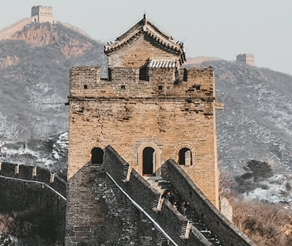
Great
Wall of China |
China |
204
BC |
|
4 |
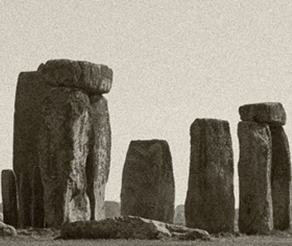
Stonehenge |
Wiltshire,
England |
c.
2000 BC |
|
5 |
Leaning
Tower of Pisa |
Pisa,
Italy |
1174 |
|
6 |
Porcelain
Tower of Nanking |
Nanking,
China |
1413. Destroyed
between 1853 and 1864 |
|
7 |
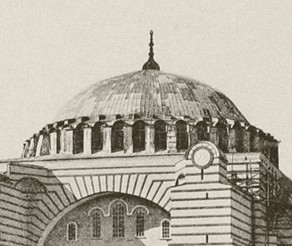
Hagia Sophia Grand Mosque |
Istanbul,
Turkey |
532-537 |
| The
Seven Wonders of the Modern World |
| # |
Construction |
Location |
Date
Built |
1 |
Panama
Canal |
Panama |
1914 |
2
|
North
Sea Protection Works |
The
Netherlands |
from
1927 |
3 |
Empire
State Building |
New
York, USA |
1932 |
4 |
Golden
Gate Bridge |
San
Francisco, USA |
1937 |
5 |
CN
Tower |
Toronto, Canada |
1976 |
|
6 |
Itaipu Dam |
Brazil and Paraguay border |
1982 |
|
7 |
Channel Tunnel |
British Channel, France and England |
1994 |
| The
New Seven Wonders of the World |
| # |
Construction |
Location |
Date
Built |
|
1
|
Chichén
Itzá |
Yucatan,
Mexico |
9th
century AD |
|
2 |
Great
Wall of China |
China |
204
BC |
|
3 |
Taj
Mahal |
Agra,
India |
btw
1628-58 (mausoleum) |
|
4 |
Colosseum
of Rome |
Rome,
Italy |
AD
80 |
|
5 |
Christ
the Redeemer Statue |
Rio
de Janeiro, Brazil |
1926 |
|
6 |
Machu Picchu |
Andes
Mountains, Peru |
15th
century AD |
|
7 |
City
of Petra |
Jordan |
from c. 300 BC |
|

|
Notes
The list of ancient wonders was compiled by Antipater of Sidon, 240
BC.
The Seven Wonders of the Middle Ages list originates from English
and French writers in the 18th century.
The list of modern wonders was composed by the American Society of
Civil Engineers in 1994.
The New Seven Wonders list was decided by popular vote on 7 July 2007. |
1.
Constructed during King Nebuchadnezzar reign (c. 605–562 BC)
2. Built by the Athenian sculptor Pheidias |
|
Sources:
1. Henry T. Conserva. Charting Your Way Through World History:
Ancient, Medieval and Modern. Bloomington, IN: AuthorHouse,
2006.
2. Courtlandt Canby, David S. Lemberg. Encyclopedia of Historic
Places. 3 vols, rev. ed. New York: Facts On File, 2007.
3. Sir Harry Johnston, Alan H. Burgoyne et al. The Wonders of
the World, vol. 1. London: Hutchinson & Co, 1911.
4. Gregory T. Pope, ed. The Seven Wonders of the Modern World.
Popular Mechanics, December 1995, pp.48-56.
5. J.S. Russell. Perspectives in Civil Engineering. Reston,
Va. American Society of Civil Engineers, 2003.
6. Sacks, D. Encyclopedia of the Ancient Greek World, rev.
ed. New York: Facts On File, 2005.
7. Juan Silverio. Trivia: Where Three Roads Meet for Education
and Entertainment. Xlibris, Corporation, 2010.
8. Mary B. Woods, Michael Woods. Seven Wonders of the Ancient
World. Minneapolis: Twenty-First Century Books, 2009.
|
| |
|
|