|


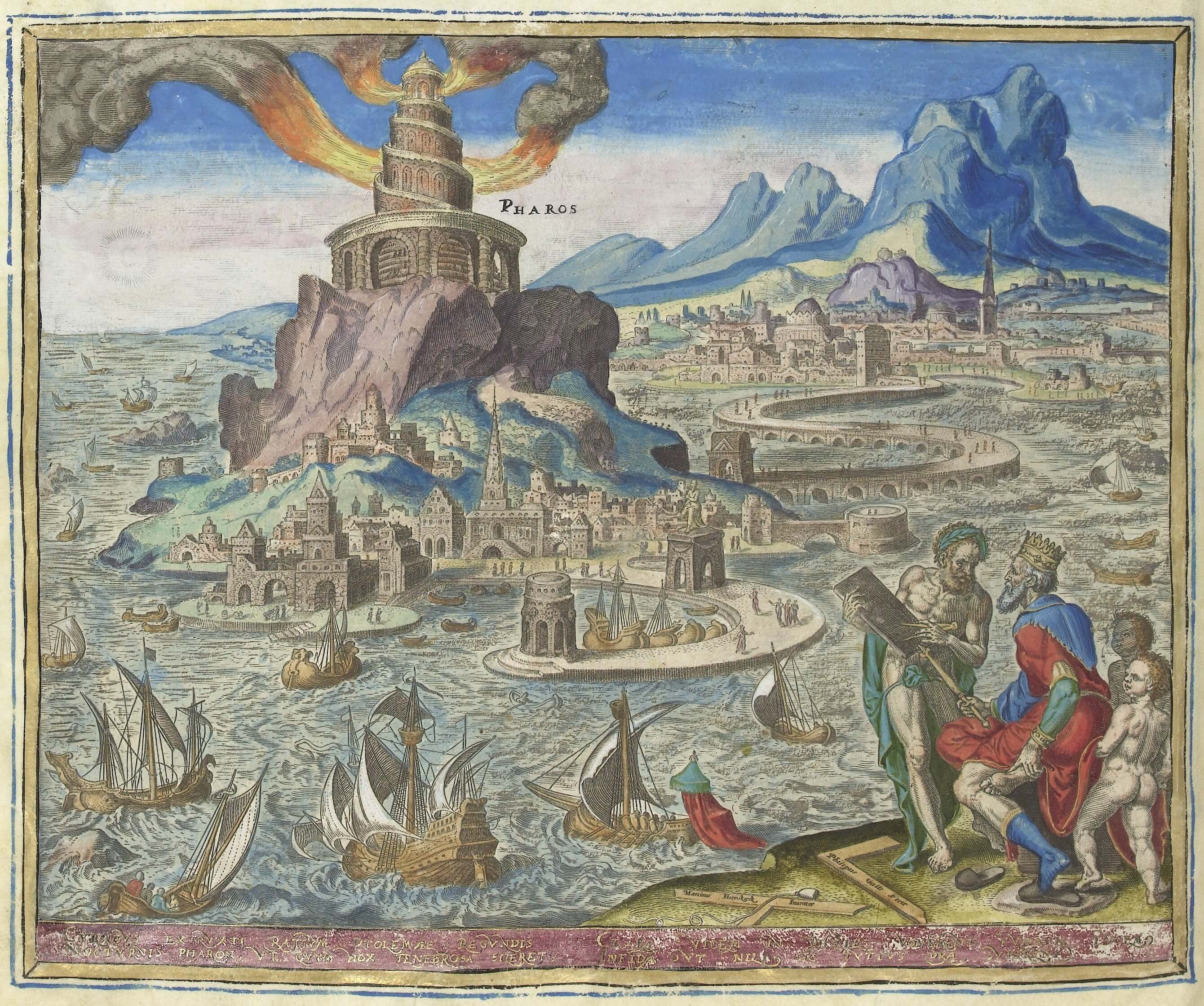
Lighthouse (Pharos) of
Alexandria
Engraving, by Philips Galle, after Maarten van Heemskerck, 1572
Rijksmuseum, Amsterdam
Constructed on the Egyptian island of Pharos around the 3rd century
BC, the lighthouse was designed by the Greek architect Sostratus of
Cnidus. It stood as a towering beacon, guiding ships through the treacherous
waters of the Nile Delta and serving as a symbol of Alexandria's wealth
and power. Rising to an estimated height of over 100 metres, it was
one of the tallest man-made structures of its time. Its construction
from white marble and limestone contributed to its grandeur. The lighthouse
was destroyed by a series of earthquakes in the 14th century AD, ending
its remarkable reign as one of the most remarkable engineering feats
of antiquity.



See Seven Wonders of
the World

|
|
|