
|
|
|
|||||||||
 |
||||||||||
| Hercules Seghers (c. 1589–c. 1638) | ||||||||||
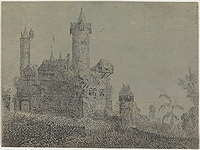
| Hercules Seghers, born in Haarlem, was a Dutch painter, draughtsman, and printmaker whose work stood apart from the mainstream of his time. Trained as a child by Gillis van Coninxloo, Seghers developed a deep interest in landscapes, but unlike his contemporaries, he was drawn to scenes of decay and vast, melancholic spaces, often empty of life. His visions of crumbling ruins and sweeping mountains seem born more from imagination than observation, and though some believe he travelled through the Liège region or possibly the Alps, his focus always remained on the grandeur of desolate places. Seghers was active in several cities, including Haarlem, Leiden, Utrecht, Amsterdam, and The Hague. His life was plagued by poverty, so much so that he often printed his etchings on linen and fabric, and it is said that shopkeepers, who took his prints in place of payment, treated them as little more than wrapping paper. Yet his technical daring was remarkable: he pioneered experimental colour printing, using hand-applied oil paints, tinted paper, and cloth to create unique impressions unlike anything seen in Dutch printmaking. His landscapes often relied on broad horizontal bands of light and shadow, a structure that distanced his work from the Baroque preferences of his day, while his distant perspectives and patient attention to weathered stone and overgrown paths give his art a timeless, almost otherworldly character. Though largely forgotten in the eighteenth century, Seghers was later admired by Rembrandt, who reworked some of his plates, and modern scholars now see him as an independent, visionary figure who quietly broke away from the conventions of his time. He died in The Hague after falling down a staircase while drunk. | ||||||||||
. |
||||||||||
| |
||||||||||


 |
||||||||||
| |
||||||||||
  |
||||||||||


 Art
Art