|
|
|
|||||||||
 |
||||||||||
| (2857) | ||||||||||
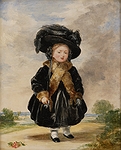
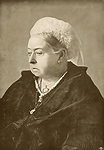
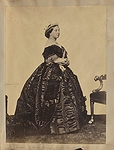
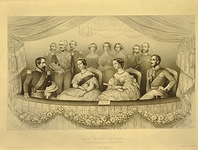
| Victoria Queen of Great Britain and Ireland (1819–1901) Other names: Alexandrina Victoria Biographical Queen of Great Britain and Ireland 1837–1904† Empress of India 1876–1901† Defender of the Faith 1838–1901† Victoria was the only child of Edward, Duke of Kent—fourth son of George III—and Princess Victoria of Saxe-Coburg, whose brother Leopold later became King of the Belgians. From a young age, she was brought up under the close and rather limited supervision of her mother and her governess, Baroness Lehzen, with the clear aim of preparing her for royal duty. She became Queen of the United Kingdom on 20 June 1837, following the death of her uncle, King William IV. Due to the Salic Law, she could not inherit the throne of Hanover, which passed instead to another uncle, Ernest, Duke of Cumberland. Her coronation at Westminster took place the following year, on 28 June 1838. Despite her youth, Victoria quickly showed a solid understanding of constitutional monarchy and her personal role within it—an understanding developed through years of guidance, not least in regular letters from her uncle Leopold, who remained an active influence on her thinking. Having spent most of her early years surrounded by adults, she developed an unusually mature character and a strong sense of her own will. This became clear in 1839 when Lord Melbourne’s government fell. Breaking with convention, Victoria refused to dismiss her ladies of the bedchamber at Sir Robert Peel’s request. Peel resigned, and Melbourne’s ministry was temporarily preserved—a political outcome that suited her own preference. In the early years of her reign, Melbourne was not only her prime minister but also a personal confidant and tutor in matters of state. His measured, typically English approach provided a welcome counterweight to the more continental style of counsel offered by Leopold. When she came of age to marry, Victoria fell deeply in love with Prince Albert of Saxe-Coburg and Gotha, whom she married on 10 February 1840. Together they had nine children—four sons and five daughters. Albert, with his cool and methodical nature, became her closest partner in governing. His death in 1861 plunged her into deep mourning and led to a prolonged withdrawal from public life, which initially damaged her popularity. However, under Disraeli’s leadership, and especially after she was declared Empress of India, her standing recovered. Her long reign and accumulated political insight gave her a lasting influence not only over British policy but also through her family ties to many European royal courts. She was known to favour conservative statesmen like Melbourne and Disraeli, rather than more assertive or reform-minded figures such as Palmerston and Gladstone. Her political instincts, while shaped by personal loyalties and cultural leanings, were generally sound. Her attachment to German traditions and heritage, though, encouraged her son to lean heavily towards France, a tendency not without its complications. Victoria died widely mourned. After her death, many of her private letters were published. While they are often wordy and stylistically plain, they show clearly her unwavering dedication, sound practical judgement, and strong sense of purpose. Her reign saw many significant events and reforms: Canada was granted a constitution, the penny post was introduced, the Education Department was established, and the Corn Laws were repealed. It also encompassed the Crimean War, the Indian Mutiny, Irish Church disestablishment, the Ballot Act, the Berlin Conference, the Zulu War, the extension of influence in Egypt, the Irish Home Rule campaigns, the South African War, and the Australian Commonwealth Bill. Her reign was also a period of remarkable literary achievement. Place of birth: Kensington Palace, London Place of marriage: St James' Palace, London Place of death: Osborne House, Isle of Wight Place of burial: Royal Mausoleum, Frogmore, Windsor Daughter of Prince Edward, Duke of Kent (Hanover), and Victoria, Princess of Saxe-Coburg-Saalfeld. She married Albrecht, Prince of Saxe-Coburg and Gotha in 1840, and had issue. |
||||||||||
| |
||||||||||
| |
||||||||||
 |
||||||||||