
|
|
|
|||||||||
 |
||||||||||
| (M19) | ||||||||||
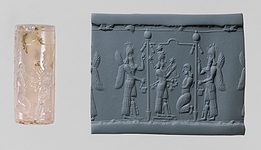
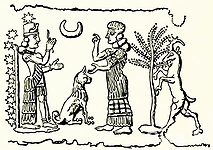
| Ishtar In the religious traditions of Mesopotamia, Ishtar emerged as the Akkadian version of a much older Sumerian figure, Inanna, whose tangled mythology and regional importance made her a natural candidate for assimilation. She was worshipped from c. 2500 BC to AD 200, with cult centres being found throughout Mesopotamia, particularly in Babylon and Nineveh. Though the precise origins of Inanna remain unclear—whether she was Semitic or simply became associated with Semitic deities over time—her identification with Ishtar helped create a single goddess whose character spanned fertility, warfare, sexual power, and cosmic authority. The Akkadians, inheriting and adapting Sumerian beliefs, gave Ishtar a wider reach: she became tied to the planet Venus, stood alongside the sun and moon gods in an astral triad, and took on roles that blurred celebration and catastrophe. In her earlier roles, she was linked to agricultural abundance and the contents of the storehouse—grain, meat, dates, wool—with a stylised tree or gateway often marking her presence. Paired with Dumuzi, a god of seasonal growth, she embodied fertility but never motherhood, instead characterised by youth, beauty, and fierce independence. The animals associated with her, such as the lion, goat, and dog, reinforced her mixed nature—stormy, sensual, protective, and violent all at once. As her influence spread through Semitic-speaking regions, she absorbed other local goddesses, eventually becoming known as Queen of the Universe and drawing powers once attributed to older high gods like An, Enlil, and Enki. Despite her status among the Anunnaki, the highest rank of deities, her myths dwell on emotional extremes—life and death, longing and vengeance—capturing the force of a goddess who resisted neat definition across cultures and centuries. Daughter of either Sin; Ea; Enki; Anu and Antu; or sister of Ereshkigal, Samas, and Teshub; or sister and wife (or mother and wife) of Tammuz; or wife of Nabu, or of Marduk. |
||||||||||
| |
||||||||||
 |
||||||||||
| |
||||||||||
 |
||||||||||
|
||||||||||


