
|
|
|
|||||||||
 |
||||||||||
 |
||||||||||
 |
||||||||||
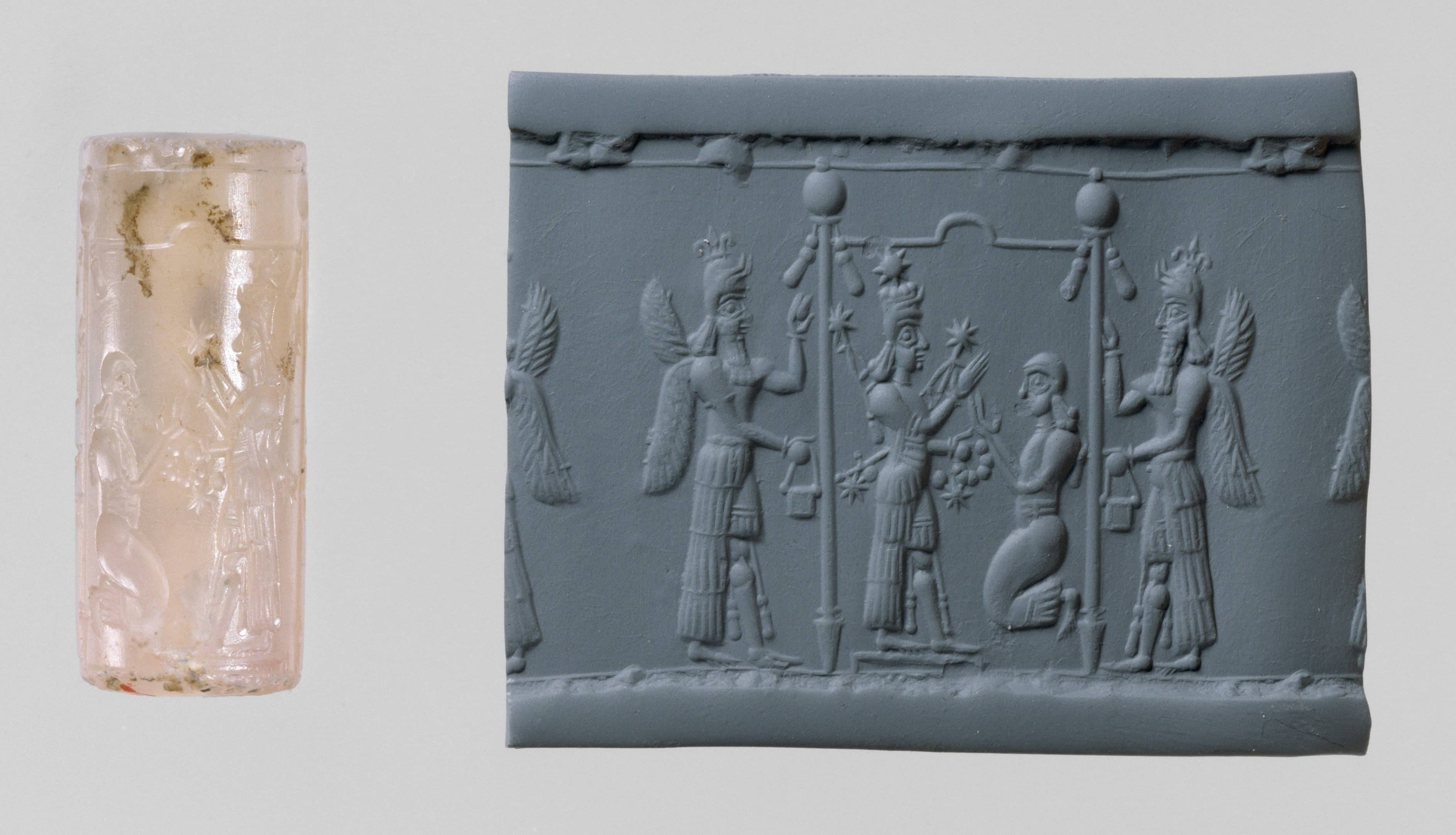
Cylinder seal depicting the
worship of Ishtar Flawed neutral chalcedony, 3.1 cm height, Assyrian, late 9th–early 8th century BC The Metropolitan Museum of Art, New York City |
||||||||||
| This seal presents a statue of the goddess Ishtar standing upon a platform within a canopied shrine, identifiable by her crossed quivers and starred crown, flanked by winged protective genii, while a supplicant kneels in veneration. During the early first millennium BC, Babylonian and Assyrian seals were executed using a variety of techniques, including linear, drilled, cut, and notably modelled styles. They were were rolled onto soft clay to leave an impression, serving as personal or official marks in administrative and ritual contexts. The modelled style, derived from Middle Assyrian seal carving and palace sculpture under Sargon II, was principally employed to depict scenes of worship and conflict. |
||||||||||
 |
||||||||||


