
|
|
|
|||||||||
 |
||||||||||
 |
||||||||||
 |
||||||||||
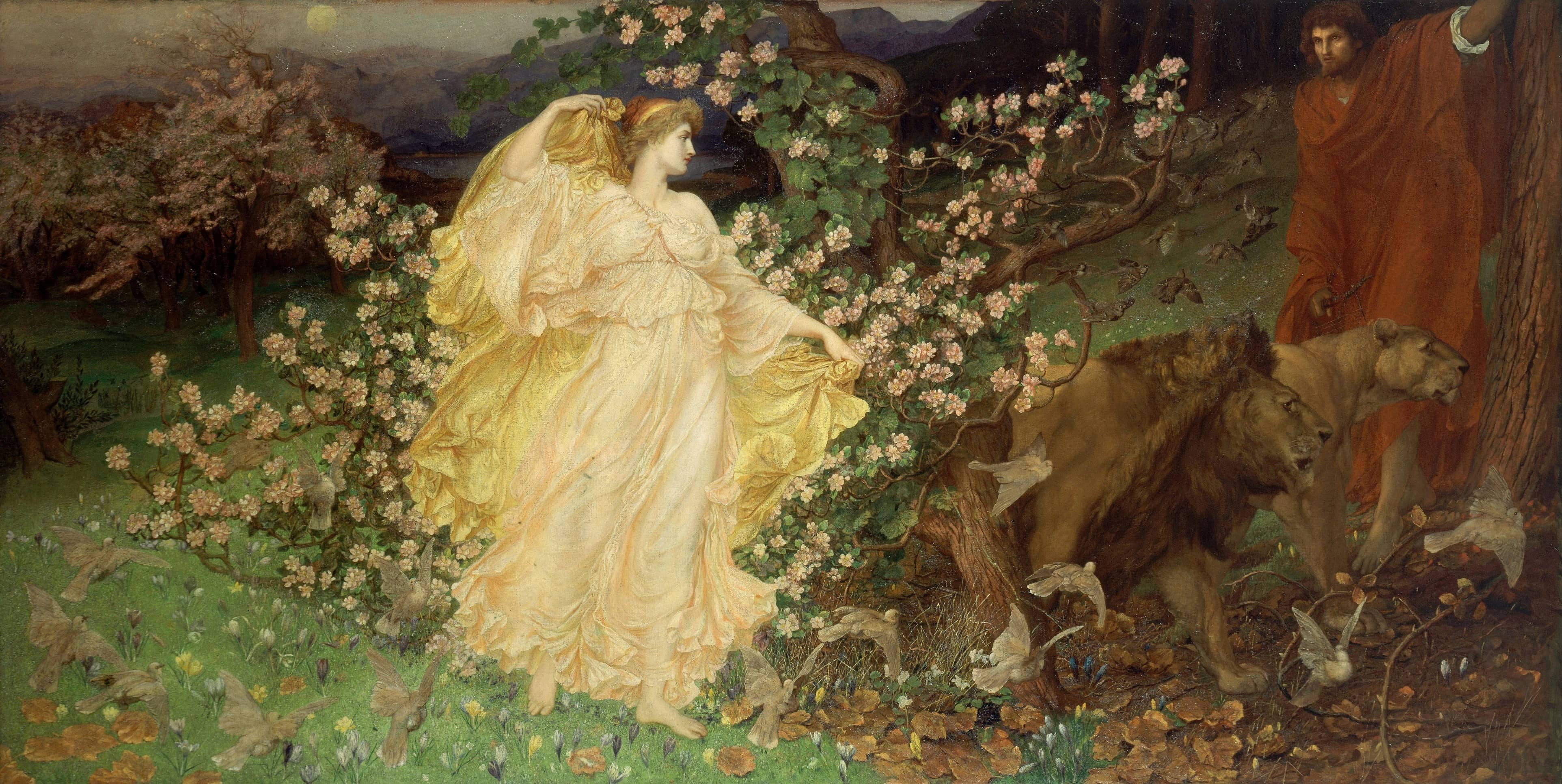
Venus and Anchises Oil on canvas, 148.6 x 296.5, by William Blake Richmond, 1889–90 Walker Art Gallery, Liverpool |
||||||||||
|
This portrayal of the mythological encounter between Venus and Anchises
conveys the idea of love as a force of transformation. Inspired by Virgil’s
Aeneid, the scene illustrates the moment when the goddess of love
seduces the mortal prince. This is not just a fleeting romance, but a moment
that shapes history, leading to the birth of Aeneas and the founding of
Rome. The painting contrasts the changing seasons, with the remnants of
autumn in one corner and the arrival of spring as fresh blossoms appear
wherever Venus steps. The presence of lions suggests power, while doves
dispersing sparrows may symbolise the triumph of divine love over the
mundane. Though the scene is drawn from Greek mythology, Richmond sets it
against a northern landscape, evoking an English spring to highlight
renewal. His composition is rich in warm tones, soft textures, and flowing
drapery, reinforcing the dreamlike atmosphere. Known for his decorative
approach, he blends elements of Symbolism and Pre-Raphaelite influence, with
luminous colours and intricate detailing enhancing its romantic and mythical
quality. |
||||||||||
 |
||||||||||


