
|
|
|
|||||||||
 |
||||||||||
| ◄◄◄ | ||||||||||
| St
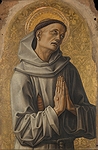
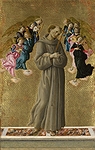
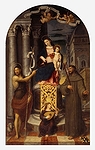
Francis of Assisi (1182–1226) Other names: Angelo, Il poverello Biographical Canonised 1228 Born into a wealthy merchant family in Assisi, Francis was the son of Pietro di Bernardone, a rich merchant, and of Pica de Bourlémont(?), from Provence (her only verifiable name is Giovanna). His only known sibling was his brother named Angelo. Francis was named Giovanni at his baptism after John the Baptist, but his father changed his name to Francesco in honour of the time he had spent in France due to his business in silk cloth. Francis embarked on a remarkable journey of spiritual transformation that would leave an indelible mark on the history of Christianity. Initially, he embraced a life of indulgence and extravagance, revelling in the pleasures of his youth and aspiring to chivalric ideals. However, a series of profound personal experiences, including a period of imprisonment following a battle between Assisi and Perugia, led to a radical shift in his outlook. He renounced his worldly possessions and embraced a life of poverty, simplicity, and devotion to God. He found solace in nature, viewing all creation as a reflection of divine beauty. His love for animals, which he considered brothers and sisters, became a hallmark of his teachings. Francis's profound spirituality and deep compassion drew followers, and he established the Franciscan Order (the Order of Friars Minor), a mendicant order that emphasised poverty, humility, and service to the poor. He also founded the Order of Saint Clare, and the Order of Brothers and Sisters of Penance. His Rule of Life, inspired by the teachings of Christ, guided the Franciscans to live simply, relying on alms and manual labour for sustenance. He encouraged his followers to embrace the joy of the Gospel, spreading peace and love among all people. His charismatic personality and unwavering commitment to his ideals attracted a diverse group of followers, including nobles, peasants, and even Sultan al-Kamil of Egypt, to whom Francis preached during the Fifth Crusade (but failed to convert). In 1224, while praying on Mount Alvernia, Francis received the stigmata–the wounds of Christ–imprinted on his hands, feet, and side. This miraculous event further deepened his spiritual connection to Christ and intensified his devotion to a life of humility and self-sacrifice. After his death, he left behind a legacy of profound spiritual influence that continues to inspire and transform lives today. St Francis is the patron saint of animals, birds, Catholic Action, ecologists, merchants, and zoos. Place of birth: Assisi Place of death: Santa Maria degli Angeli (Portiuncula), Assisi Place of burial: church of San Francesco, Assisi Son of Pietro di Bernardone and possibly Pica de Bourlémont. |
||||||||||
| |
||||||||||



 |
||||||||||
| |
||||||||||
 |
||||||||||
|
||||||||||


