
|
|
|
|||||||||
 |
||||||||||
| (2079) | ||||||||||
| Julius
Caesar
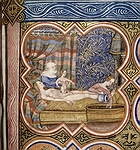
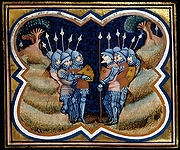
Dictator of Rome (100? BC–44 BC) Biographical Governor of Cisalpine Gaul Governor of Illyricum Governor of Transalpine Gaul Consul of Rome 59 BC, 48 BC, 46 BC, 45 BC Governor of Farther Spain 61-60 BC Praetor 62 BC Pontifex maximus 63 BC Curule aedile 65 BC Quaestor in Farther Spain Julius Caesar had a difficult early life with his father's death when he was 16. His mother, Aurelia, played. In 84 BC, he married Cornelia, daughter of Lucius Cornelius Cinna, who was Marius’s ally in the revolution, who in turn, was Lucius Cornelius Sulla's rival. When Sulla returned to Italy in 83 BC to lead a counter-revolution against Marius and his allies, he demanded from Caesar that he divorce Cornelia. Caesar refused, risking his wealth and life. He fled to Asia and Cilicia for military service. After Sulla’s death, Caesar returned to Rome, began his political career, and was captured by pirates, later raising a ransom and capturing them in return. By 59 BC, he formed the First Triumvirate with Pompey and Crassus and was elected consul. Caesar used his position to pass reforms, secure command over several provinces, and launch military campaigns. His conquest of Gaul from 58 to 50 BC expanded his power, serving as a key step in his broader goal of reshaping Rome. By 55 BC, he had crossed the Rhine and invaded Britain, later returning in 54 BC to subdue a revolt in Gaul. In 52 BC, Vercingetorix led a fierce resistance with a scorched-earth strategy, but Caesar captured Avaricum, defeated him at Alesia, and secured his surrender. By 50 BC, Caesar focused on consolidating his victories while political tensions back in Rome grew, especially after the deaths of Crassus in 53 BC and his daughter Julia in 54 BC, which strained his relationship with Pompey, Julia's husband. Caesar used his political influence to maintain his military command, resisting Senate attempts to replace him. By 49 BC, as the Senate demanded he give up his army, Caesar demanded that he and Pompey resign together, leading to his declaration as a public enemy when he refused. Caesar’s crossing of the Rubicon in January 49 BC ignited a civil war, challenging Rome's aristocratic rule and setting the stage for a shift towards autocracy. Neither Caesar nor Pompey wanted war, but Caesar’s rising power made him a target, and Pompey’s jealousy pushed him closer to the nobility. The war unfolded quickly, with Caesar defeating Pompey’s forces in Spain and at Pharsalus in 48 BC, while Pompey was later killed in Egypt. Caesar then expanded his campaigns to Anatolia, Africa, and Spain before returning to Rome, where he implemented significant reforms, such as the calendar. Despite his many achievements, including major reforms to Roman governance and his role in transitioning Rome from a republic to a more autocratic system, Caesar’s actions alienated many, including former allies. His clemency towards his enemies and his consolidation of power led to his assassination by former allies, including Brutus and Cassius. Caesar’s death, though, turned him into a martyr, and his legacy continued to influence Rome’s future, even though his own ambitions were cut short, and Rome fell into further civil war. Caesar's approach to leadership and his personal character were often divisive. While his soldiers admired his military strategies, his enemies were not won over by his policies of reconciliation. Known for his tactical genius on the battlefield, Caesar’s political acumen was equally impressive, displaying exceptional skills in administration and public relations. His personal allure was undeniable, yet it was his ability to manipulate public perception through propaganda that truly set him apart. Through his writings, he carefully shaped his image, presenting events in a light that benefited his ambitions. What distinguished Caesar most was his boundless energy, both mentally and physically. He managed to complete major feats, including writing extensive works while simultaneously leading military campaigns. His physical endurance was extraordinary, as evidenced by his swift marches and his survival instincts, notably when he saved himself from drowning in Alexandria. His personal life, however, was often controversial, marked by relationships that stirred political unrest, such as with Cleopatra, which strained his alliance with Pompey. Despite these personal risks, Caesar's political reforms—though often seen as controversial—fundamentally reshaped Roman governance, replacing an outdated aristocracy with a more centralised rule. His impact on Rome and beyond extended well beyond his lifetime, influencing Western civilisation long after his death. Place of birth: Rome Place of death: Rome Son of Gaius Caesar and Aurelia, he was married firstly to Cornelia (gens Cornelius), in 84 BC (with issue), secondly to Pompeia (gens Pompeia) in 67 BC (divorced 63 BC), and thirdly to Calpurnia in 59 BC. He also had illegitimate issue by Queen Cleopatra VII of Egypt (Ptolemy). |
||||||||||
| |
||||||||||
 |
||||||||||
| |
||||||||||
 |
||||||||||
|
||||||||||


