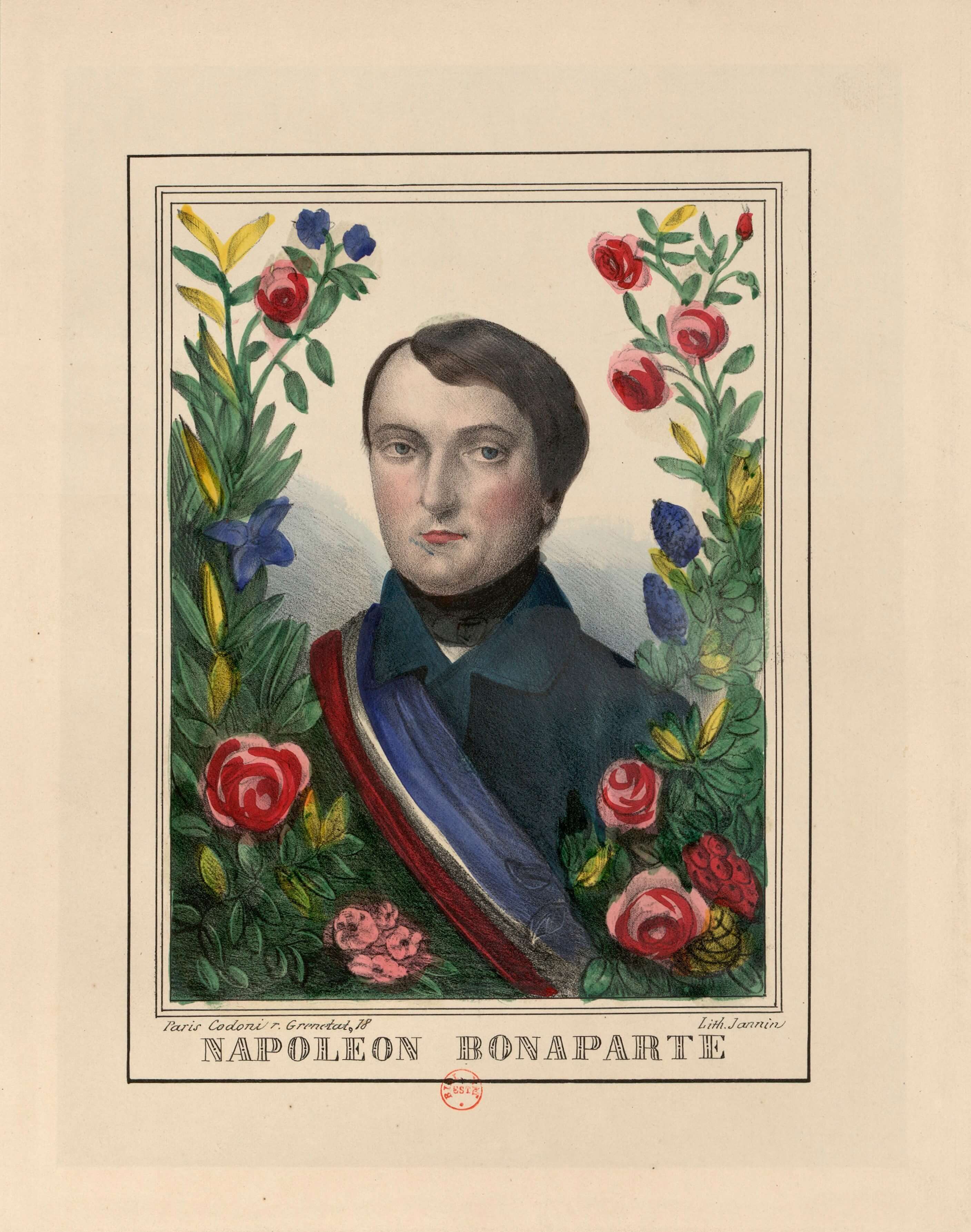
Louis-Napoléon Bonaparte,
Napoleon's nephew, is here presented with a softened physiognomy
framed by an abundant floral motif, aligning with
mid-nineteenth-century visual conventions that sought to legitimise
imperial identity through romanticised portraiture. The stylised use
of botanical ornament, iconography common to the Second Empire,
conveys an effort to associate his image with natural order and
dynastic continuity, reflecting broader tendencies in
post-revolutionary French iconography. Despite the simplicity of
composition, the piece operates as a subtle tool of political
persuasion, cloaking ambition in the language of sentimental
authority.