|


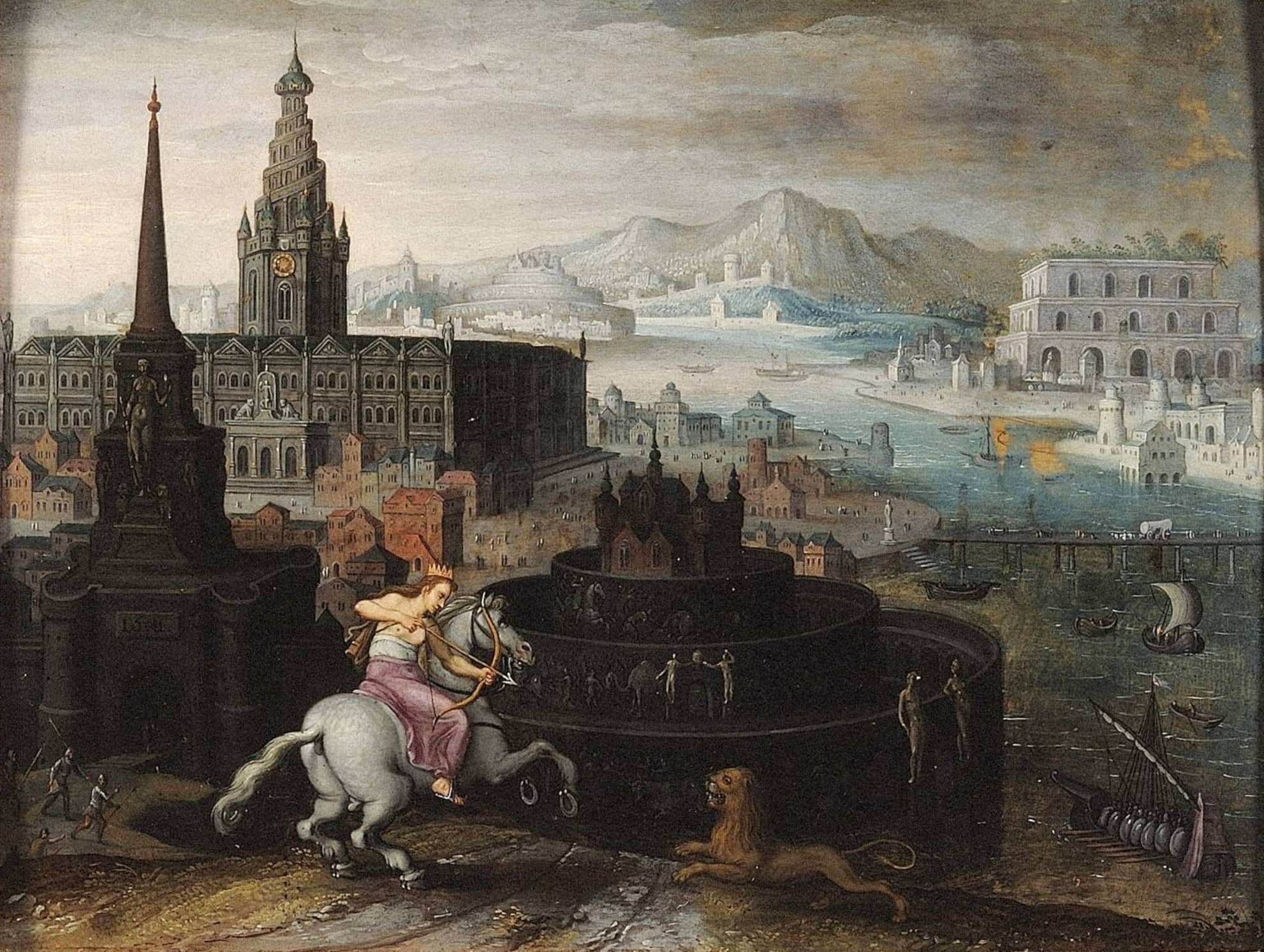
Walls
of Babylon
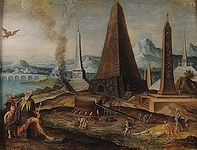
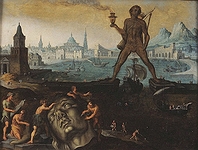
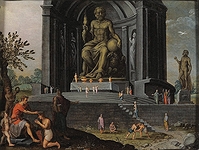
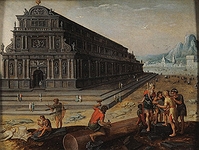
Oil on wood, 36 cm x 47 cm, by Bernard Rantwyck 1611, after the engraving
by Philips Galle
Pitti Palace, Florence
See Seven Wonders of the
World
The Walls of Babylon were immense defensive structures surrounding
the ancient city in present-day Iraq, built during the reign of Nebuchadnezzar
II (c. 605–562 BC). Known for their strength and elaborate design,
they featured multiple layers of fortifications, moats, and towers.
The walls were said to be wide enough for chariots to ride along the
top and included the renowned Ishtar Gate, adorned with glazed
bricks depicting lions, dragons, and bulls. While their engineering and
scale contributed to their inclusion amongst the Seven Wonders of the
Ancient World (sometimes in preference to the Hanging Gardens), ancient
accounts, particularly those of Herodotus, likely exaggerated their
dimensions. Archaeological excavations confirm that Babylon
had formidable walls, but their actual height was probably around
12 metres rather than the 100 metres claimed by Herodotus. The Ishtar
Gate, a significant element of the city's defences, has been partially
reconstructed and is now displayed in the Pergamon Museum in Berlin.
Rantwyck's depiction of the walls combines artistic imagination with
historical accounts, offering a Renaissance-era perspective on one
of history’s most renowned structures.


|
|

|