
|
|
|
|||||||||
 |
||||||||||
 |
||||||||||
 |
||||||||||
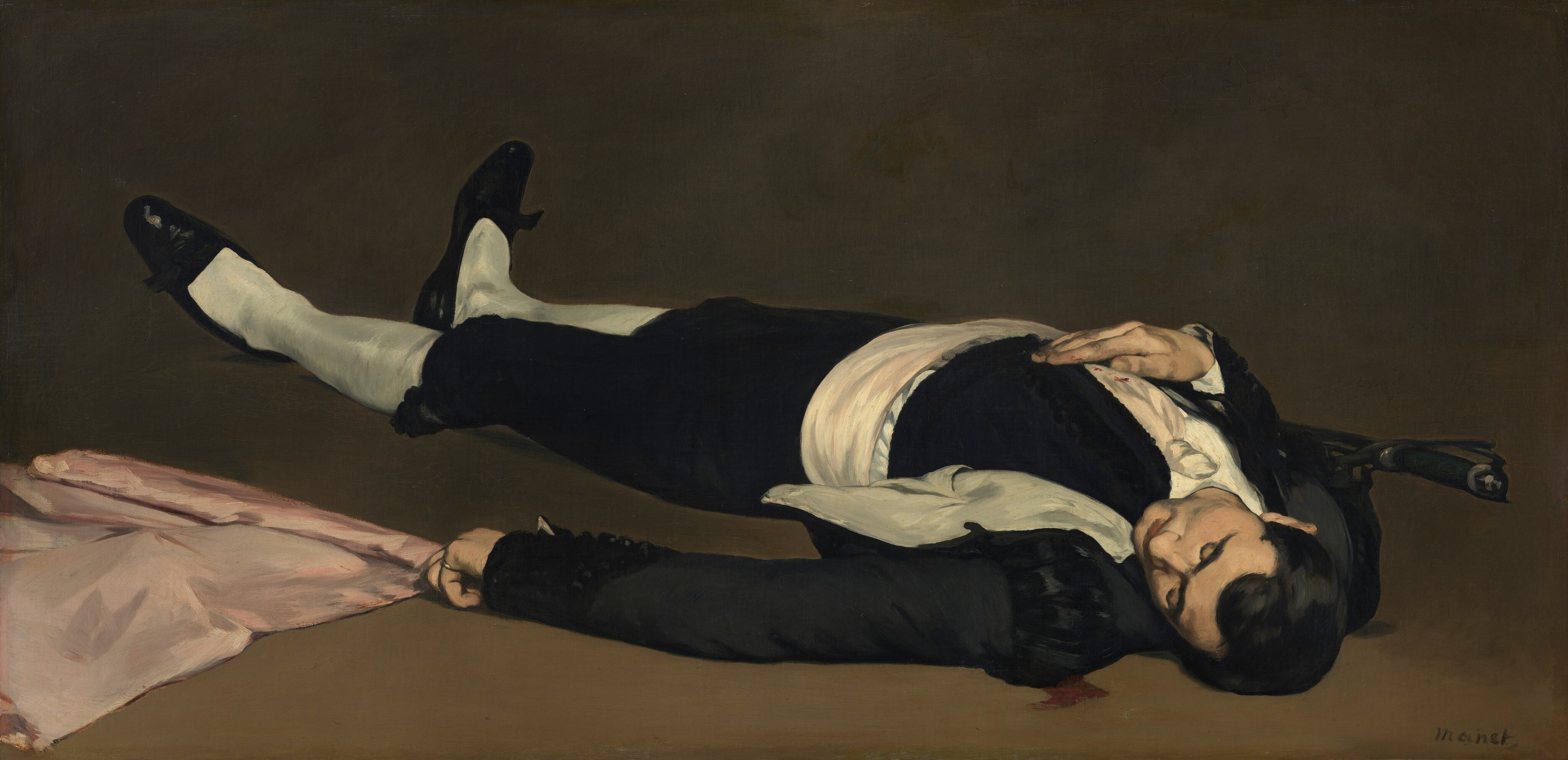
The Dead Toreador Oil on canvas, 75.9 × 153.3 cm, by Édouard Manet, 1864? National Gallery of Art, Washington DC |
||||||||||
| Manet was fascinated by Spanish culture and bullfighting in the early 1860s and produced several Spanish-themed works. The painting originally formed the lower portion of a larger canvas titled Episode from a Bullfight, exhibited at the Salon of 1864, which he later cut apart after harsh criticism of its proportions and confused spatial relationships. Seen from a low vantage, a bullfighter in black and white lies sprawled across the ground, his body almost filling the long horizontal canvas as a pale pink flag lies beside him. His eyes are closed and blood marks his white tie and hand, seeping onto the brown floor near his shoulder while a dagger rests at his elbow. Art historians generally consider the figure a studio model posed in costume, not an identifiable toreador killed in an actual corrida, and the identity of the male model has never been securely documented. Manet frequently used people around him—friends, relatives, or professional studio models—dressed in costume for such subjects. |
||||||||||
 |
||||||||||


