|
|
|
|||||||||
 |
||||||||||
| Édouard Manet (1832–1883) | ||||||||||
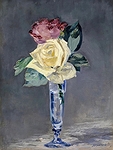
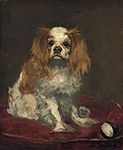
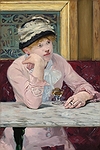
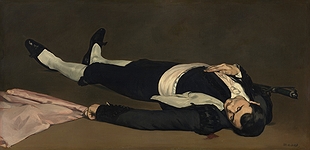
| A French modernist painter, regarded as the most important master of Impressionism, Manet was born in Paris into a family with strong political connections. After studying briefly under the Abbé Poiloup, he entered Collège Rollin, where his passion for drawing led him to neglect his other subjects. In 1848, he was sent aboard the ship Guadeloupe to Rio de Janeiro. Upon his return, he studied in Thomas Couture’s studio, where his independent approach often irritated his teacher. For six years, he visited the studio intermittently, travelling to cities such as Cassel, Dresden, Vienna, Munich, Florence, Rome, and Venice. During this time, Manet created several important works. Initially influenced by Couture, his later paintings showed the influence of Gustave Courbet and Velázquez, and by the early 1860s, he focused almost entirely on studying Spanish masters in the Louvre. His works caused a stir, with only Delacroix defending him. Rejected by the Salon, Manet became a central figure in the Salon des Refusés, surrounded by a group of artists and writers who would later form the Impressionist movement. Despite early mockery, he continued to exhibit and, in 1867, displayed fifty paintings in a large gallery, though some works were banned. His supporters helped him gain recognition, and The Garden played a role in the development of plein air painting. After serving in the Franco-Prussian War, Manet painted The Battle of the Kearsarge and the Alabama. In the 1870s, his works continued to provoke debate, but he remained steadfast. He exhibited at the Salon for the last time in 1883, the same year he died in Paris. His works, known for their masterful use of light, are particularly admired for their later, more Impressionistic qualities. In addition to his paintings, Manet left behind pastels, engravings, and illustrations, such as for Les Chats by Champfleury and Edgar Allan Poe’s The Raven. | ||||||||||
| |
||||||||||
|
|
||||||||||
| |
||||||||||
  |
||||||||||


 Art
Art