
|
|
|
|||||||||
 |
||||||||||
| Henry Fuseli (1741–1825) | ||||||||||
|
A Swiss painter and
draughtsman, Fuseli went to England at an early age with the intention
of becoming a writer, but after showing Joshua Reynolds some of his
drawings, he was persuaded to devote himself entirely to art. His
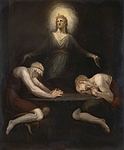
brilliance became widely recognised after the opening of his Milton
gallery in 1798. His works are numerous, all displaying, in many
respects, the mind of a master. Fuseli’s imagination was lofty and
exuberant; while he often achieves the sublime, he sometimes falls into
extravagance and distortion. Yet, his extravagance remains that of a
genius. His anatomical knowledge was extensive, though at times he
displayed it too ostentatiously, giving his figures the forms seen in
the dissecting room rather than those of a living subject. His most
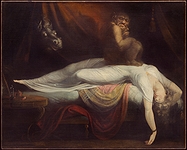
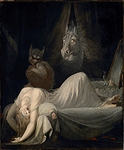
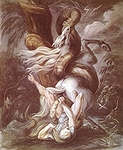
renown works, such as The Nightmare and The Titan's Escape,
reflect his fascination with the supernatural and the power of the
imagination, marking him as a key figure in the Romantic movement. He
became an associate of the Royal Academy in 1788. Fuseli died in London. |
||||||||||
| |
||||||||||


 |
||||||||||
|
|
||||||||||
| |
||||||||||
  |
||||||||||


 Art
Art