
|
|
|
|||||||||
 |
||||||||||
 |
||||||||||
 |
||||||||||
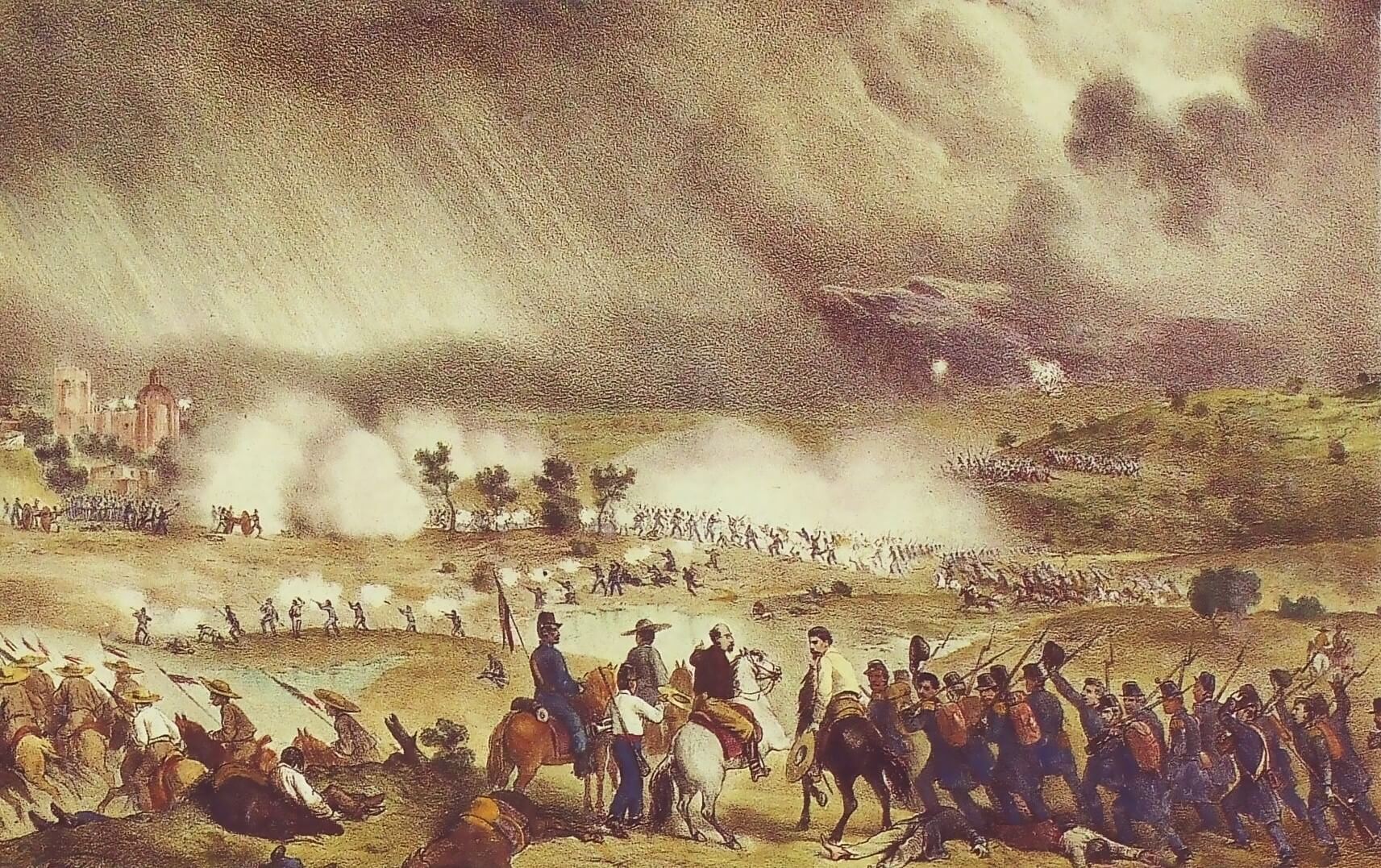
War of Mexican Independence: Battle of Zitácuaro Lithograph by Constantino Escalante (1836-68) |
||||||||||
| Ishtar, standing on the far left, wears the distinctive horned crown that marks her as a deity in Mesopotamian imagery, a symbol used exclusively for gods and goddesses across Babylonian and Assyrian reliefs and seals. Behind her rises a vertical line of eight-pointed stars, which serve as her principal emblem, directly identifying her with the planet Venus; these star symbols are used only in reference to Ishtar and appear in both cuneiform and visual sources from the early second millennium BC onward. Above the scene is a crescent moon, the symbol of the moon god Sin, commonly appearing in combination with her stars as part of the broader astral triad representing the principal celestial deities of the Mesopotamian pantheon. Her right hand is raised in a traditional gesture of salutation or divine address, while the left extends slightly forward, consistent with the posture of deities receiving worship or engaging with mortals. Positioned before her is a lion, whose presence symbolises her dominance, divine authority, aggression, and passion. Before her stands a mortal female figure, facing her with both hands raised in reverence—possibly a priestess or supplicant. At the far right is a date palm tree, a common fertility symbol in Mesopotamian iconography that reinforces Ishtar’s traditional associations with growth, reproduction, and the abundance of nature. Lastly, a gazelle or deer appears beside the tree, an animal frequently tied to the wild and the renewal of spring, themes which fall squarely within Ishtar’s sphere as goddess of fertility and seasonal life. |
||||||||||
 |
||||||||||


