
|
|
|
|||||||||
 |
||||||||||
| Anthony van Dyck (1599–1641) | ||||||||||
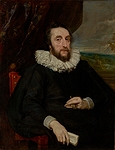
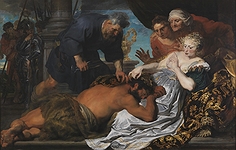
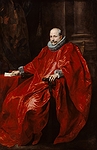
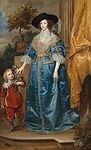
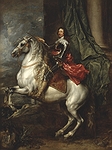
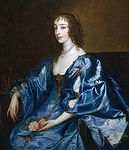
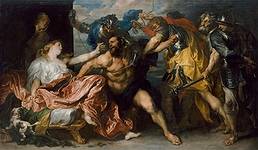
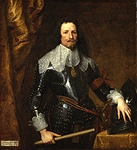
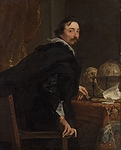
| Born in Antwerp, Van Dyck began his artistic training under Hendrik van Balen at the age of ten and joined Rubens’ academy in 1615, remaining his assistant until 1620. He was admitted to the Guild of St Luke in 1618 and paid a brief visit to England in 1620, working for James I, who rewarded him with £100. Following Rubens’ advice, Van Dyck travelled to Italy in 1621, spending most of his time in Genoa while also visiting Rome, Venice, and Palermo, where he produced numerous important works. On returning to Antwerp in 1626, he quickly gained renown for his historical subjects and portraits, rivalling Rubens in reputation. In 1632, Charles I invited him to England after seeing his portrait of Nicholas Laniere; Van Dyck was graciously received, provided apartments at Blackfriars, and knighted as ‘Principal Painter in Ordinary to their Majesties at St James’. He became the court’s preferred painter, capturing the likenesses of the king, queen, and royal children. During a visit to Brussels in 1634–35, he produced some of his finest works. After Rubens’ death in 1640, Van Dyck returned to Antwerp before travelling to Paris in the hope of a royal commission; disappointed and in failing health, he returned to England and died at Blackfriars, London. Van Dyck’s portraiture ranks alongside Titian’s, surpassing him in the elegance of hands and accessories, with natural attitudes and expressive heads that avoid the stiffness often seen in portraiture. His Italian works display rich Venetian colouring influenced by Titian, later blended with Flemish techniques on his return to Antwerp. His early English portraits are vibrant and carefully finished; as his fame grew, he focused primarily on the heads, leaving minor details to assistants. Over nine hundred works by Van Dyck are recorded. | ||||||||||
| |
||||||||||



 |
||||||||||
|
|
||||||||||
| |
||||||||||
  |
||||||||||


 Art
Art