
|
|
|
|||||||||
 |
||||||||||
 |
||||||||||
 |
||||||||||
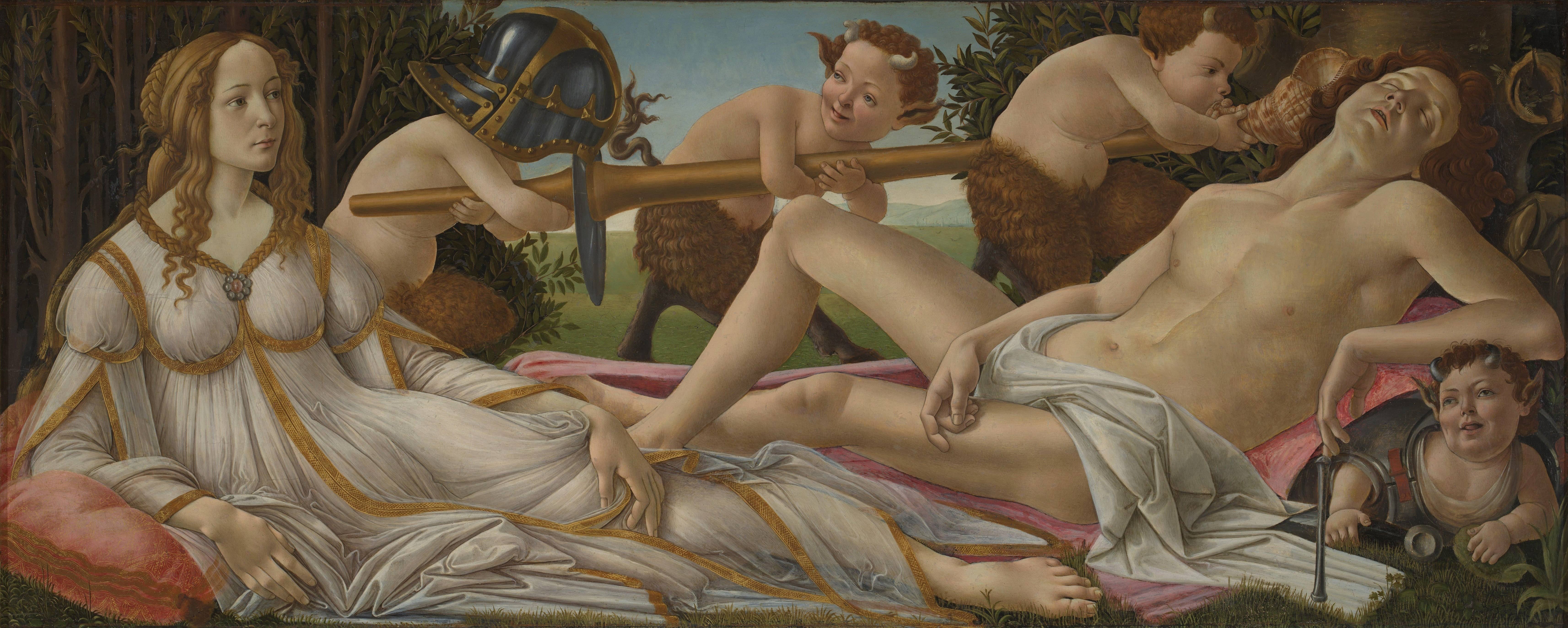
Venus and Mars Egg tempera and oil on wood, 69.2 x 173.4 cm, by Sandro Botticelli, c. 1445–1510 The National Gallery, London |
||||||||||
|
Possibly commissioned for a marriage and intended for installation in a bedchamber, the scene presents a delicate contrast between the figures. In a somewhat droll depiction that was fashionable at the time, Venus, serene and attentive, projects a gentle yet watchful presence as she gazes upon Mars, who lies in a peaceful and vulnerable slumber. The image has often been understood as the gentle triumph of the alert and dignified goddess of love over the sleeping warrior’s impulsive martial nature, offering a visual expression of the idea that romantic passion softens or overcomes the roughness of battle. The pair are surrounded by playful satyrs who toy with Mars’s weapons, one holding his spear attached to a conch shell, another wearing his helmet, and a third who blows into the conch at his ear in an attempt to rouse him, drawing attention to the humorous helplessness of the sleeping god. The scene has alternatively been interpreted as a celebration of marriage, reminding newlyweds of the pleasures and distractions of love, and of the contrast between vigilance and surrender to pleasure. It has been claimed that Simonetta Vespucci served as the model for Venus and Giuliano de’ Medici for Mars, despite his death years before the painting’s creation, though this remains speculation. A more plausible explanation is that the figures, particularly Mars, were inspired by Greek and Roman sculpture, as such subjects were highly admired by noble families in Florence during the Renaissance. |
||||||||||
 |
||||||||||


