|
|
|
|||||||||
 |
||||||||||
 |
||||||||||
 |
||||||||||
The Garden of Earthly
Delights Oil on oak panel triptych, 205.5 x 384.9 cm, by Hieronymus Bosch, 1490–1500 Museo Nacional del Prado, Madrid |
||||||||||
|
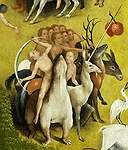
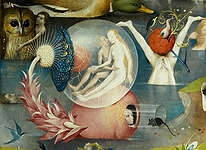
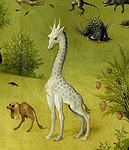
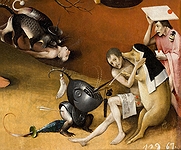
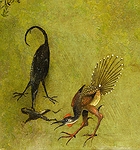
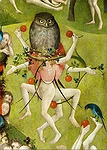
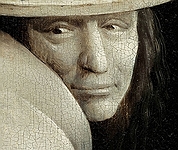
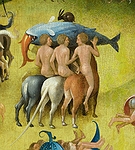
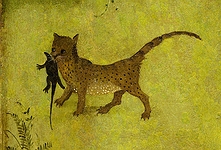
Bosch’s triptych stands as a masterful work that combines theological narrative with surreal invention, reflecting a late mediaeval worldview steeped in moral allegory. The left panel presents an idyllic Eden, where the Creator introduces Eve to Adam amid strange creatures and a fantastical landscape. The central panel, awash in vibrant colour and densely populated with nude figures engaged in uninhibited pleasure, depicts a world surrendered to sensual delight, devoid of divine guidance. The right panel, stark and infernal, shows the terrifying consequences of sin in a nightmarish hellscape. Bosch’s style combines minute naturalistic detail with fantastical distortions, forming an unsettling visual logic that defies linear interpretation. His work resists didactic clarity, instead evoking a sense of dreamlike inevitability. The unity of the triptych lies in its moral progression: from divine order, through human folly, to damnation. With imaginative symbolism and an unorthodox visual language, Bosch critiques the human inclination toward vice beneath the veneer of earthly pleasure. |
||||||||||
|
|
||||||||||
 |
||||||||||