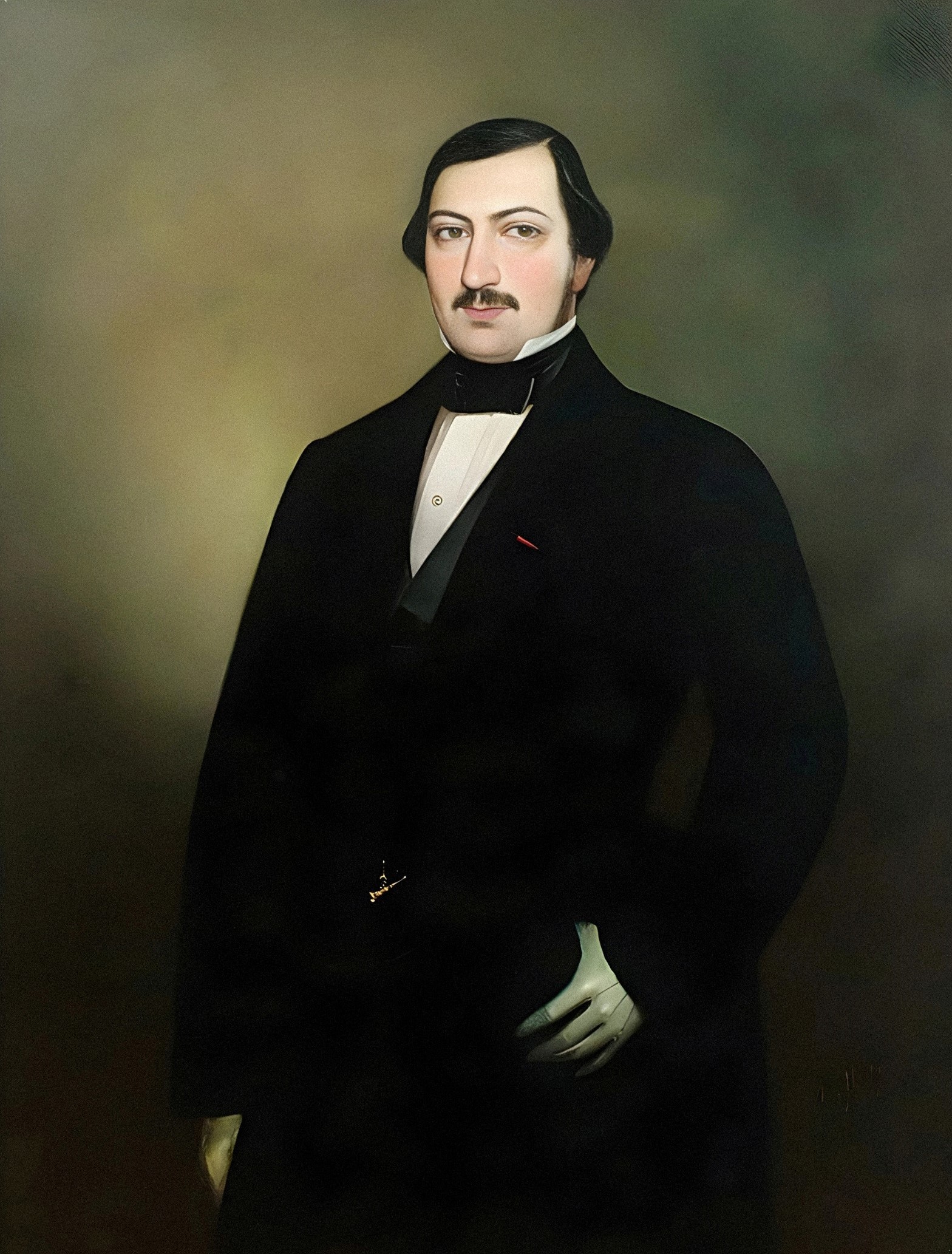
The atmosphere of this
portrait is refined and subtly theatrical, shaped by the subtle
transitions in tone that create a soft, almost velvety depth, with a
quiet, deliberate intensity. It conveys a sense of studied formality
typical of 19th-century academic portraiture, but there’s a quiet
intimacy beneath the surface. Da Mota employs a muted palette that
accentuates the rich black of the clothing and the softness of the
background, allowing the eye to settle gradually into the details
rather than being pulled in all at once. Everything feels calculated
but not stiff—from the perfectly tailored lines of the coat to the
faint glint of a chain or pin that hints at a certain formality or
status. There’s a distinct sense of time and place embedded in the
textures and choices of attire, but without relying on any overt
symbolism. Da Mota’s skill lies in how steadily and unobtrusively he
communicates elegance, letting the composition speak with restraint
and grace.