
(M8)
Amazon
Ads |



Jambhala
Other names: Dsam-Bha-la (Tibet),
Kuvera (Sivaites),
Dzambhala,
Zambala
Biographical
In Mahayana Buddhism, Jambhala is the god of riches,
and an aspect of Ratnasambhava. His Hindu
counterpart is Kuvera,
and he also appears in Jaina mythology.
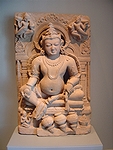
Jambhala's iconography sometimes depicts him seated on a lotus throne,
his right hand raised in the gesture of granting blessings and his left
hand holding a mongoose. His crown, jewels, and rich robes symbolise
his wealth and status. His rotund form, bulging eyes, and the mongoose
spewing jewels from its mouth symbolise the abundance he bestows upon
his devotees.
Other versions show him walking on a person who vomits up jewels,
and he usually has three heads, each one representing one of
the three Dhyanibuudhas.
Jambhala is revered as a benevolent deity, compassionate and
generous, who grants blessings.
Devotees seek such blessings to improve their financial well-being,
attract prosperity, and overcome financial hardships. However, Jambhala's
true wealth lies in his power to bestow spiritual riches, such as wisdom,
compassion, and enlightenment. He guides individuals towards a life of
generosity, encouraging them to share their wealth and cultivate a selfless
attitude. He manifests in five distinct forms, each possessing unique
attributes and associations. Yellow Jambhala, the most common form, represents
wealth, prosperity, and generosity. His golden complexion and the mongoose's
golden jewels symbolise the material abundance he bestows. White Jambhala,
associated with purity, longevity, and health, is depicted with a moon-white
complexion and a mongoose spewing pearls. Green Jambhala, embodying power,
influence, and success, possesses a verdant hue and a mongoose spitting
emeralds. Red Jambhala, symbolizing love, passion, and vitality, is depicted
with a fiery red complexion and a mongoose emitting rubies. Black Jambhala,
representing protection, overcoming obstacles, and conquering fear, manifests
with a dark complexion and a mongoose spewing black diamonds.
© 2024 The Universal Compendium