(M14)
Amazon
Ads |


Adam
Biographical
Adam, meaning 'man', and associated with 'Edom', is the progenitor of
the human family. His body was formed of the dust of the earth and animated
by the breath of God. His history is given with great simplicity in the
first four chapters of Genesis. God having, by the word of his power,
called into existence the inanimate elements, then the vegetable creation,
then beings possessed of mere animal life, at last produced man, made
in the divine image, endowed with a rational and immortal soul and invested
with dominion over the inferior works of creation. The maturity of his
powers was not attained by gradual progress. He came at once from the
hand of his creator, perfect in form and pure and sinless in nature. A
beautiful garden provided with every object to charm the senses was the
residence of the first man. The beasts of the field were subject to him,
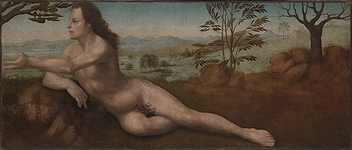
and were named by him. To complete his happiness, Eve was formed,
from Adam's rib,
as pure and innocent as himself, and
became his companion. It pleased God to subject this first pair to a test
of obedience simple and easy in itself. They were forbidden to eat of
the fruit of one particular tree in the garden called the 'tree of tlie
knowledge of good and evil', whilst the fullest liberty to partake of
all the rest was given to them. Although they were created sinless, they
were nevertheless capable of sinning; and Satan, the great spirit of evil,
who had fallen from his own high state, taking advantage of this peculiarity,
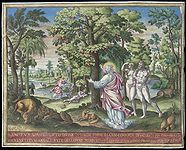
by the most artful devices induced Eve to eat of the forbidden fruit,
and she, in her turn, became the successful tempter of Adam,
after he accepted the fruit she offered
him.
Thus they violated the covenant wliich
they had made with God, according to the terms of which their obedience
would have secured to them the uninterrupted enjoyment of life, happiness
and the communion of their maker, whilst disobedience subjected them to
the loss of the divine image, the depravation of their holy nature, the
interruption of their happiness and the loss of natural and spiritual
life. Sad was the change. God no longer talked with them as a friend,
but in his anger drove them from the garden under a heavy curse. The curse
was distinctly pronounced on Adam and Eve, and the general tenor of it,
by which its effects are transmitted to their latest posterity, clearly
demonstrates that Adam stood in the relation of a representative of the
human race, and that they were so identified with him in his representative
character as to he liable to all the disastrous consequences of his first
sin. We 'sinned in him, and fell with him in his first trangression'.
Thus was sin introduced into the
world, the taint of which attaches to every human being, while the earth
groans under unnumbered woes. The gloomy scene was cheered by the first
promise of the Messiah, who as 'the seed of the woman' shall 'bruise the
serpent's head', and thus repair the ruins of the fall. The history of
Adam's subsequent life is not noted with much particularity. He lived
long to suffer and repent. He became a sorrowful spectator of the murdered
body of his second-born son; he saw his first-born driven out as a wanderer;
he beheld the corruption of his numerous and increasing posterity; he
felt conscious that he was the guilty author of all; and when nine hundred
and thirty years old yielded his life to the touch of death.
© 2024 The Universal Compendium