
|
|
|
|||||||||
 |
||||||||||
| (M12) | ||||||||||
|
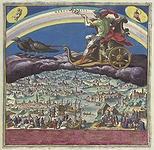
Mercury Other names: Mercurius Biographical A Roman god of merchants, commerce, and profit, and also travellers, thieves, and tricksters, Mercury was probably one of the dii lucrii [gods of profit]. His nature can be understood from his name, which is linked to merx [goods] and mercari [to trade]. A temple dedicated to him was built as early as 495 BC near the Circus Maximus, and an altar stood near the Porta Capena beside a well; in later periods, a temple appears to have been constructed on the same site. Under the name malevolus (‘ill-willed’), Mercury had a statue in the vicus sobrius, or ‘sober street’, where shops were not permitted, and where milk was offered to him in place of wine. The statue held a purse, indicating his functions. His festival took place on 25 May and was mainly observed by merchants, who also went to the well near the Porta Capena, believed to possess magical properties; they sprinkled themselves and their goods with its water for purification and to ensure strong profits. In later Roman tradition, Mercury, as patron of merchants and tradespeople, was identified with the Greek Hermes, the messenger of the gods, and the attributes and myths of Hermes were transferred to him, although the Fetiales did not accept this identification and used a sacred branch, not the caduceus, as a symbol of peace. The similarity between Mercury and Hermes is slight, and their identification shows the uncritical way in which the Romans approached this matter. As with Hermes, Mercury is usually shown wearing winged sandals or a winged cap, and carrying the caduceus. In Virgil's Aeneid, Mercury is sent by Jupiter to remind Aeneas to leave Carthage and continue his mission, since his destiny is to found the line that will lead to Rome. Son of Jupiter and Maia, and had issue: • the two Lares by Larunda/Lara • Pan, according to some sources |
||||||||||
| |
||||||||||

 |
||||||||||
| |
||||||||||
 |
||||||||||


