
|
|
|
|||||||||
 |
||||||||||
| (M10) | ||||||||||
| Scylla
(1)
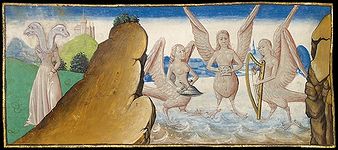
Biographical Scylla has different versions in mythology, sometimes depicted as a fearsome monster and at other times as a beautiful maiden. According to Homer, Scylla lived on one of two rocks situated between Italy and Sicily, known as Scylla and Charybdis, which were only a short distance apart. Scylla, the daughter of Crataeis, was described as a terrifying creature, barking like a dog, with twelve feet, six long necks, and mouths, each filled with three rows of sharp teeth. The opposite rock, much lower than hers, contained an immense fig tree under which Charybdis resided. Charybdis, another monstrous figure, would swallow the sea's waters three times a day and spit them back out, creating a perilous hazard for passing ships. Scylla is also described in some accounts as a monster with six heads of different animals or only three heads. One tradition tells of Scylla as a beautiful maiden who played with the sea nymphs and was loved by the marine god Glaucus. When she rejected his advances, Glaucus sought the help of Circe to win her love, but Circe, jealous of the fair maiden, threw magic herbs into the waters where Scylla bathed, transforming her into a monstrous creature with the upper body of a woman and the lower body of a fish or serpent, surrounded by barking dogs. Another myth suggests Scylla was transformed by Poseidon's wife, Amphitrite, out of jealousy. Some versions of the myth also say that Scylla was killed by Heracles, who was avenging the theft of Geryon's oxen, though Phorcys is said to have restored her to life. Virgil speaks of several Scyllae in the lower world. Daughter of Phorcys, or Crataeis, or Trienus, or Typhon and Echidna, or Phorcys and Hecate Crataeis, or Phorcys and Lamia (2), or Phorbas and Lamia (2), or Triton and Crataeis, or Poseidon and Crataeis. |
||||||||||
| |
||||||||||


 |
||||||||||
| |
||||||||||
 |
||||||||||
|
||||||||||


