|
Penelope
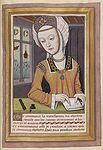
A daughter of Icarius and Periboea of Sparta. According to Didymus, Penelope
was originally called Ameirace, Arnacia, or Arnaea, and Nauplius or her
own parents are said to have cast her into the sea where she was fed by
sea-birds from which she derived her name.[15B]
She was married to Odysseus, king of Ithaca, by whom she had an only child,
Telemachus, who was yet an infant at the time when her husband went with
the Greeks to Troy. During the long absence of Odysseus, she was beleaguered
by numerous and importunate suitors, whom she deceived by declaring that
she must finish a large shroud which she was making for Laertes, her aged
father-in-law, before she should make up her mind. During the day time
she accordingly worked at the shroud, and in the night she undid the work
of the day. By this means she succeeded in putting off the suitors. But
at length her stratagem was betrayed by her servants; and when, in consequence,
the faithful Penelope, who was pining and longing for her husband's return,
was pressed more and more by the impatient suitors, Odysseus at length
arrived in Ithaca, and as she recognised him by several signs, she heartily
welcomed him, and the days of her grief and sorrow were at an end.[15B]
While the Homeric tradition describes Penelope as a most chaste and faithful
wife, later writers charge her with the very opposite vices, and relate
that by Hermes or by all the suitors together she became the mother of
Pan. Odysseus on his return for this reason repudiated her, whereupon
she went to Sparta, and thence to Mantineia, where her tomb was shown
in after times.[15B]
According to another tradition, Penelope, with Telemachus and Telegonus,
who had killed his father Odysseus, went to Aeaea, and there married Telegonus;
whereas, according to others again, she married Telegonus in the islands
of the Blessed.[15B] |