|
|
|
|||||||||
 |
||||||||||
| (M10-L) | ||||||||||
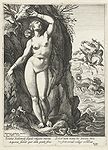
| Andromeda
Cassiopeia, proud of her daughter’s beauty, claimed that Andromeda was more beautiful than the sea nymphs known as the Nereids. Offended by this, the Nereids persuaded the god Poseidon to punish the land, and he did so by sending a flood and a sea-monster to devastate the country. The oracle at Ammon declared that the only way to end these disasters was to sacrifice Andromeda to the monster. Reluctantly, Cepheus gave in to the demands of his people and had Andromeda chained to a rock by the sea. She was discovered there by Perseus, who killed the monster and saved her. In return, he was given Andromeda's hand in marriage. However, Andromeda had already been promised to another man, Phineus (whom some sources call Agenor), which led to a violent conflict at her wedding. Perseus fought Phineus and his supporters, killing them. Andromeda became Perseus’s wife and bore him many children. In honour of her rescue, the goddess Athena placed her among the stars as a constellation, depicted as a maiden with her arms outstretched and bound to a rock. Some ancient writers located the scene of her ordeal near the city of Joppa (modern-day Jaffa) in Phoenicia, while others believed it took place in a region of Ethiopia with the same name. The story of Andromeda was a popular subject for tragic plays in antiquity, though none of these dramas have survived. The moment of her rescue by Perseus is also preserved in ancient relief sculpture. Daughter of Cepheus and Cassiopeia, she married Perseus and had issue. |
||||||||||
| |
||||||||||
| |
||||||||||
 |
||||||||||
|
||||||||||