|
|
|
|||||||||
 |
||||||||||
| ◄◄◄ | ||||||||||
| Bodhidharma
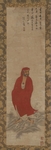
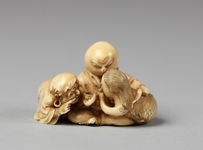
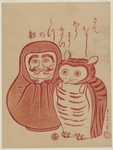
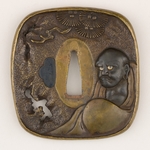
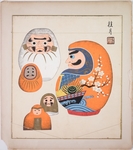
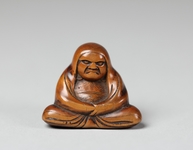
(fl. c. 501–c. 600) Other names: Putidamo (Chinese), Daruma (Japanese) Biographical Bodhidharma was a Buddhist monk who, according to tradition, introduced the Zen branch of Mahayana Buddhism. Most traditional accounts describe him as a South Indian meditation master, possibly of Brahmin background, who travelled to China and brought Chan teachings from India, with the date of his arrival uncertain and sometimes placed in the late fifth century. The historical record concerning his life is fragmentary, and most accounts are legendary in nature. Contemporary references are inconsistent, describing him as Persian or South Indian, with one giving his age as 150 years, while the other making him younger. His earliest biography by the Chinese monk Daoxuan appears roughly a century after Bodhidharma’s death. During the Tang dynasty, he was associated with the Shaolin Monastery, where he was said to have instructed monks and was venerated as the first patriarch of the school later known as Chan in China, Zen in Japan, Son in Korea, and Thien in Vietnam. Within Indian transmission narratives, he was further regarded as the 28th patriarch in the line descending from the Buddha. Bodhidharma is said to have met Emperor Wudi around 520 in a well-known exchange in which the emperor asked about the merit gained from building temples and monasteries, and Bodhidharma replied that such acts, when done to accumulate merit, were spiritually ineffective, bringing at best favourable rebirth but not enlightenment. He has been depicted in numerous portraits with the features of an Indian, with a full beard, earrings, and wearing the robe of a monk. He is often shown during his nine years of cross-legged meditation, which he is said to have loathed to interrupt, taken from the story in which he is described as having retreated to Luoyang and meditated facing a cave wall for nine years. A folkloric account claims he cut off his eyelids to overcome drowsiness, which are said to have become the first tea plants, explaining his wide-eyed depictions in art and the use of tea in Zen practice to sustain wakefulness in meditation. |
||||||||||
| |
||||||||||
| |
||||||||||
 |
||||||||||