| The
Mughal Empire, which ruled much of the Indian subcontinent
from 1526 to 1857, was founded by Babur, a descendant of both
Timur and Genghis Khan, after his victory over Ibrahim Lodi
at the First Battle of Panipat. Babur’s successors,
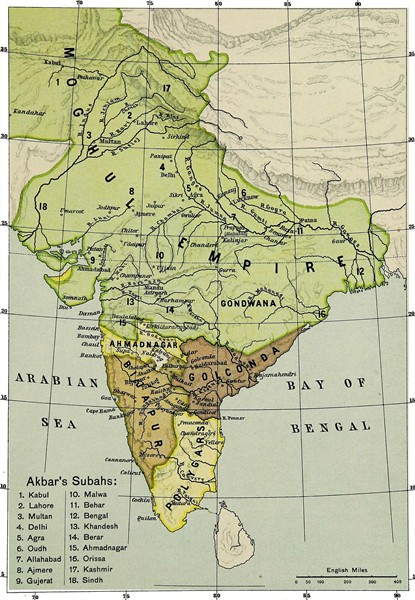
particularly Akbar, expanded the empire’s boundaries
through military conquests and diplomatic alliances while
implementing policies that sought to integrate the diverse
religious and cultural groups under his rule. Akbar’s
administration introduced a centralised bureaucracy, a standardised
taxation system, and policies of religious tolerance, including
the abolition of the jizya tax on non-Muslims and the promotion
of a syncretic court culture. His successors, such as Jahangir
and Shah Jahan, continued the empire’s traditions of
artistic patronage and architectural innovation, resulting
in monumental structures, including the Taj Mahal, Red Fort,
and Jama Masjid. Under Aurangzeb, the empire reached its territorial
zenith, but faced increasing internal strife due to prolonged
military campaigns, economic strain, and religious policies
that alienated segments of the population. The growing influence
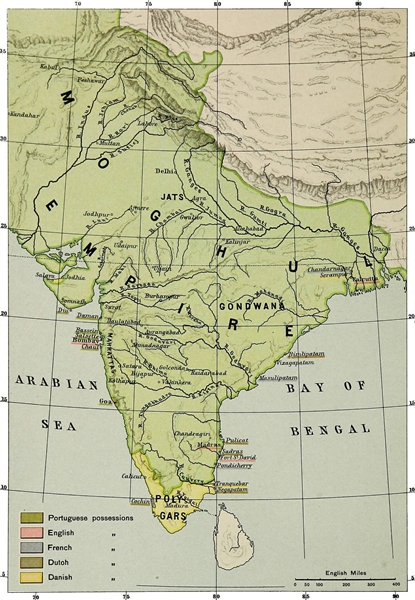
of European trading companies, particularly the British East
India Company, coincided with a period of Mughal decline,
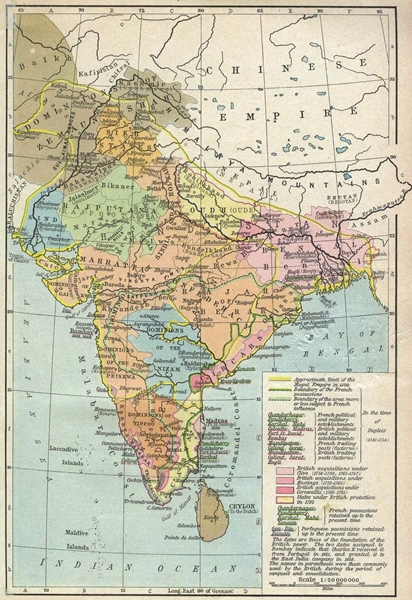
as regional powers asserted independence and the empire became
increasingly fragmented. The Indian Rebellion of 1857, in
which the last Mughal emperor, Bahadur Shah II, was declared
the symbolic leader of the uprising against British rule,
marked the final collapse of Mughal authority and led to the
formal dissolution of the empire by the British Crown. Despite
its fall, the Mughal Empire’s influence remains visible
in South Asia’s legal and administrative institutions,
many of which were adapted by British colonial authorities
and later shaped the governance structures of modern India,
Pakistan, and Bangladesh. The empire’s impact on language
is evident in the development of Urdu, which emerged as a
lingua franca during the Mughal period, blending Persian,
Arabic, and local vernaculars. Mughal contributions to cuisine
continues to define South Asian gastronomy. Architecturally,
the empire’s emphasis on domes, minarets, and intricate
geometric and floral designs influenced subsequent construction,
with Mughal-era buildings remaining central to cultural and
national identities. Additionally, the empire’s history
continues to inform contemporary political and social debates,
particularly regarding religious coexistence, heritage preservation,
and historical narratives that shape national identities in
the region.
|