



Amazon
Ads |


Doge of Venice
(–831)
Biographical
Doge of Venice 804–10 dep.
Spatharios [Byzantine]
Tribune of Malamocco
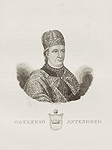
Obelerio Antenoreo governed during a formative and turbulent period in the early history of the Venetian Republic, marked by conflicts between the Byzantine Empire, the Frankish Kingdom, and local Venetian factions. His reign was defined by internal strife, external pressure, and the shifting allegiances that characterised Venice's early political landscape. He led a coup against the doges Giovanni and Maurizio II, and after they were deposed and exiled, he installed himself on the throne at Malamocco. This unusual location for his appointment reflected the instability in Venice at the time, with political factions vying for control. He had the support of the pro-Frankish faction of Venice, and upon assuming power, Obelerio associated his brother, Beato, with the dogeship. The brothers' factional alignment with the Franks brought Venice into the orbit of Frankish influence, creating tensions with the Byzantine Empire, which traditionally viewed Venice as part of its sphere of influence. In 807, the Byzantines launched a military expedition to reassert their authority over Venice, and Obelerio was forced to negotiate. As part of the agreement, Beato was taken as a hostage to Byzantium. When Beato returned from Byzantium, Obelerio and his brother made the unprecedented decision to share power with a third individual, Valentino. This move may have been an attempt to appease rival factions within Venice, but it also reflected the unstable nature of their rule. In response to the Byzantine intervention, King Pepin of Italy launched a major military campaign to bring Venice under Frankish control. The Venetians mounted a successful resistance. In 810, Emperor Nikephoros sent ambassador Arsaphios to Charlemagne after Pepin's death. The agreement between them resulted in Charlemagne relinquishing his claim over the Byzantine province of Venetia and other territories he had occupied, in exchange for the Byzantine recognition of his imperial title. Charlemagne also handed over Doge Obelerio, who had been imprisoned for treachery, to be punished in Constantinople. Upon Arsaphios's return to Venice in 811, Obelerio and his brother Beato were deposed, and Agnello Partecipazio, a hero of the resistance to the Franks, was elected as the new Doge, marking a new chapter for Venice with Rialto as the seat of government. Obelerio fled Venice and sought refuge with Charlemagne, but he was soon handed over to the Byzantines. There are various versions of the events that followed, including one in which he was freed and returned to Venice later, attempting to regain power, but was defeated and decapitated.
Son of Encagilio. Some source state that he was married to a Frankish woman named Carola.

Families | Lands | Abbreviations and Symbols


© 2024 The Universal Compendium