
|
|
|
|||||||||
 |
||||||||||
| (4250) | ||||||||||
| Sir
John Bayley Darvall
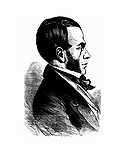
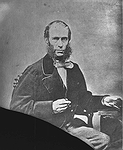
(1809–83) Biographical Companion of the Order of St Michael and St George 1869 (UK) Knight Commander of the Order of St Michael and St George 1877 (UK) Director of the Bank of Australasia 1866 Member of the NSW Legislative Assembly for West Sydney Nov. 1864–Feb. 1865, Feb.–June 1865 Member of the NSW Legislative Assembly for East Maitland 1863, 1863–64 Member of the NSW Legislative Council (life appointment) 1861–63 Member of the NSW Legislative Assembly for Hawkesbury 1859–60 Attorney general of NSW 1857, 1863 res., 1865 Solicitor general for NSW 1856; 1856–57 Member of the NSW Legislative Assembly for Cumberland (North Riding) April–June 1856, June–Oct. 1856, Oct. 1856–Nov. 1857 Queen's Counsel 1853 Member of the NSW Legislative Council for Cumberland 1851–56 Member of the NSW Legislative Council for Bathurst 1848–51 Member of the NSW Legislative Council 1844–48, res.; 1848–51 Director of the Sydney Banking Co and the Australian Banking Co. Darvall was educated at Eton and Trinity College and was admitted to the Middle Temple in 1833. He was called to the Bar in 1838. With his wife, he migrated to Australia, arriving in Sydney in 1839. His parents and siblings arrived in 1840. He became involved in pastoral affairs and, in 1839, was admitted to the Bar, establishing a highly successful practice. As he pursued a distinguished legal career, he became deeply involved in colonial politics, serving in both the Legislative Council and the Assembly, and held senior legal offices. He occupied a shifting position between liberal principle and conservative caution, styling himself a Patrician Liberal while resisting unchecked popular power. Early support for elected representation and opposition to a hereditary upper house placed him against entrenched privilege, yet he later recoiled from manhood suffrage and liberal land policies. His alliances moved pragmatically between reformers and conservative groupings when democratic expansion troubled him. Overall, Darvall pursued constitutional reform while seeking limits on democratic reach and institutional power. After years of colonial public service, he returned to England in 1865, where he continued his professional life at the English Bar. Place of birth: Felixkirk, Yorkshire, England Place of marriage: Tewkesbury, Gloucestershire Place of death: London Son of Edward Darvall and Emily Johnson, he married Elizabeth Shapland in 1837 and had issue (including Edward Elwyn, married 1878 to Florence Cook; Flora Emily Charlotte, married 1878 to George Adams; Edith, married 1877 to Arthur Bowes Smyth). |
||||||||||
| |
||||||||||
 |
||||||||||
| |
||||||||||
 |
||||||||||


