
|
|
|
|||||||||
 |
||||||||||
| (2856) | ||||||||||
| Bartolomeo
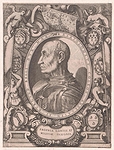
Colleoni (c. 1400–75) Biographical Captain-general of Venice 1455 An Italian condottiere, Colleoni, was born into the minor nobility of Bergamo in the early 15th century and received a solid education from the local clergy before beginning his military career at fourteen as a page in Piacenza. His early years of service under Braccio da Montone and Iacopo Caldora exposed him to the turbulent wars of southern Italy, and by 1431 he had defected to Venice, where he steadily built a reputation as a skilled commander, particularly in mountain warfare. His career was marked by both setbacks and triumphs: he was captured by Niccolò Piccinino, imprisoned in Monza in 1446 after falling out with Francesco Piccinino, and later escaped following Filippo Maria Visconti’s death. His fortunes changed dramatically in 1447 when he won a decisive victory against the French at Bosco Marengo, capturing Reynaldo di Dresnay and securing both fame and a ransom of 14,000 crowns. Colleoni’s shifting allegiances between Venice and Milan reflected the volatile politics of the time, yet his reputation as a brilliant commander grew steadily. In 1455 he achieved his greatest success when he was appointed Captain General of Venice, commanding one of Italy’s most formidable armies. In the following year, he purchased the castle of Malpaga from municipality of Bergamo, and then started to develop it as the administrative and personal centre of his own power, effectively creating a small personal domain. Colleoni's later career was defined not only by his political manoeuvring but also by his pioneering use of artillery in the field. At the Battle of Molinella in 1467 he was credited with introducing light artillery tactics, mounting cannons on wagons behind his front line so they could fire through openings in the infantry—a method that marked a turning point in Italian warfare. Though the battle ended indecisively, his innovative deployment of artillery demonstrated his forward-thinking approach and secured his place as one of the most important military tacticians of the fifteenth century. In his final decades he remained a central figure in the military and political life of Italy, balancing ambition with Venetian policy and remembered above all as a commander who transformed the role of artillery on the battlefield. Place of birth: Solza Castle, Bergamo Place of death: Malpaga Place of burial: possibly Bergamo Son of Paolo di Guidotto and Riccadonna de' Valvassori da Medolago, he married Tisbe Martinengo and had issue. |
||||||||||
| |
||||||||||
 |
||||||||||
| |
||||||||||
 |
||||||||||
|
||||||||||


