Eleanor
Roosevelt
(1884–1962)
Other names: Anna Eleanor Roosevelt
Biographical
Chair of the Commission on the Status of Women 1961–62
Chairman of the Commission on Human Rights 1946–51
First Lady of the
United States of America 1933-45
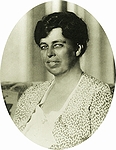
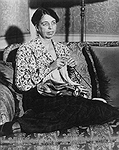
Eleanor Roosevelt, wife of Franklin D. Roosevelt and later a prominent
diplomat and humanitarian, emerged as one of the most influential
women of her era. Raised in a privileged household that valued service,
she experienced personal loss early in life, which shaped her enduring
commitment to social causes. Her education at Allenswood under Marie
Souvestre fostered a lifelong intellectual curiosity and independence,
further strengthened through community work upon her return to New
York. Her marriage to Franklin Roosevelt brought her into public life,
yet she maintained a serious and often separate course from her husband,
especially after discovering his infidelity in 1918, which altered
but did not dissolve their union. As her political engagement deepened,
particularly after Franklin’s paralysis in 1921, she joined
the Women’s Trade Union League and became active in Democratic
politics and policy. Her tenure as first lady was marked by an unprecedented
public role: she held press conferences for female journalists, toured
widely, and championed issues such as child welfare, housing reform,
and civil rights, famously resigning from the Daughters of the American
Revolution in protest of their racism. After her husband’s death,
she was appointed to the United Nations by President Truman, where
she was instrumental in the drafting of the Universal Declaration
of Human Rights. She remained politically active into the 1960s, chairing
President Kennedy’s Commission on the Status of Women and gradually
lending her support to the Equal Rights Amendment.
Place of birth: New York City
Place of marriage: New York City
Place of death: New York City
Place
of burial: Hyde Park
Daughter of Elliott Roosevelt and Anna Hall, she married Franklin
D. Roosevelt in 1905, and had issue.