|
|
|
|||||||||
 |
||||||||||
| ◄◄◄ | ||||||||||
| Pierre
Bonnard
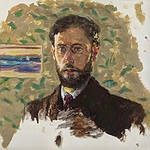
(1867–1947) Biographical Bonnard, a French painter and printmaker, was closely linked to Les Nabis and later became a central figure among the Intimists, regarded as one of modern art’s great masters of colour. Though he excelled in classical studies, he initially pursued law at his father’s urging and briefly worked in a government office, while also training at the École des Beaux-Arts and later the Académie Julian, where he met Maurice Denis, Ker-Xavier Roussel, Paul Sérusier, Édouard Vuillard and Félix Vallotton. After completing military service in 1890, he shared a studio in Montmartre and collaborated with Aurélien Lugné-Poë at the Théâtre de l’Oeuvre. In the 1890s he rose to prominence within the Nabis circle, contributing to La Revue blanche, working with the dealer Ambroise Vollard and producing lithographs and book illustrations shaped by Japanese influence, while also undertaking large decorative commissions in the French tradition. From around 1908 Bonnard's attention turned increasingly toward landscape, especially in the south of France, and he later settled at Le Cannet near Cannes. Throughout his career he remained devoted to intimate domestic interiors, nudes, still lifes and views of Paris and the Mediterranean. His works, along with Vuillard’s, were credited with the rise in popularity of Post-Impressionism in Europe, and he exhibited widely in Europe and the USA. He was offered the Legion of Honour in 1912 but declined the award. Place of birth: Fontenay-aux-Roses, France Place of death: Le Cannet Son of Eugène Bonnard and Elisabeth Mertzdorff, he married Maria Boursin, †1942, in 1925. |
||||||||||
| |
||||||||||
| |
||||||||||
 |
||||||||||