
|
|
|
|||||||||
 |
||||||||||
| (311) | ||||||||||
| Jacoba
of Bavaria
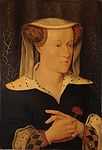
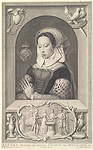
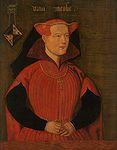
Countess of Hainaut (1401–36) Biographical Duchess in Bavaria 1434 Countess of Ostrevant 1434 Jacoba claimed her father’s duchy of Bavaria after his death in 1417, but her uncle was recognised as his successor instead. In 1421, she repudiated her first husband, John IV, duke of Brabant, after he had lost Holland and Zeeland the previous year, and left for England. Returning to Hainaut in 1424 with her new husband, Humphrey, duke of Gloucester, and an army, she found that Humphrey deserted her in 1425 and went back to England. Taken prisoner by her opponent, Philip III, duke of Burgundy, she escaped later that year. Continuing to pursue her claim to her lands, Jacoba had her marriage to Humphrey declared illegal by the pope in 1428. A settlement with Philip III was arranged through the Treaty of Delft, stipulating that she would keep her title of countess, that the administration of the three counties would pass to Philip III, and that she would not marry again without his consent. In 1430, Jacoba became attached to Frank van Borselen, with possible plans to overthrow Philip III, but the plot was discovered. Van Borselen was imprisoned in 1432, and Jacoba was forced to abdicate her countship the following year. Her marriage to Van Borselen was allowed in 1434. She died childless. Place of birth: Le Quesnoy, Flanders Place of death: Teilingen, near Leiden Gubbio Daughter of Wilhelm VI, Count of Hainaut (Wittelsbach) and Margaret of Burgundy (Valois-Burgundy), she was married firstly to Jean, Dauphin of France (Valois) in 1415, secondly to Jean IV, Duke of Brabant (Valois-Burgundy) in 1418 (annulled 1421), thirdly to Humphrey, Duke of Gloucester in 1422 (annulled 1428), and fourthly to Frank van Borselen in 1434. |
||||||||||
| |
||||||||||
 |
||||||||||
| |
||||||||||
 |
||||||||||


