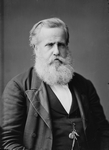
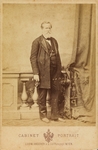
Pedro
II
Emperor of Brazil
(1825–91)
Other names:
Pedro de Alcântara João Carlos Leopoldo Salvador Bibiano Francisco
Xavier de Paula Leocãdio Miguel Rafael Gabriel Gonzaga
Biographical
Emperor of Brazil 1831–89 dep.
Prince of Brazil
1825
Prince of Grão
Para 1825
Perpetual Defender and Protector of Brazil 1831–89 dep.
Pedro II became heir to the Brazilian throne in 1831, following the
abdication of his father, Pedro I, when he was five years old. His
minority necessitated a regency that lasted nine years and was marked
by political instability. In 1840, he was declared of age in an attempt
to restore political stability and formally invested as emperor the
following year,
when he was crowned in Rio de Janeiro.
Provincial unrest
continued until 1845, but Pedro gradually established his authority
and gained recognition for his intelligence and commitment to public
welfare. He assumed the role of arbiter in national politics, using
his constitutional powers to manage conflicts between the Liberal
and Conservative parties, with substantial support from the Duke of
Caxias, Brazil's leading military commander. As the first Brazilian
monarch born in the country, he strongly defended national independence
in diplomatic disputes with Great Britain and the United States. He
also directed Brazil's participation in the War of the Triple Alliance
against Paraguay from 1864 to 1870, a conflict that enhanced the country's
international standing and expanded its territory. Pedro's 49-year
reign was characterised by political continuity and economic expansion,
particularly through the growth of coffee cultivation, which increasingly
superseded sugar as a major source of national wealth, and the development
of railway, telegraph and cable networks. Thirty-six cabinets served
during his reign, while his personal popularity remained generally
high. By maintaining support across both major political parties,
he facilitated changes of government within established constitutional
procedures, although the political system continued to favour wealthy
landowners and afforded limited representation to other social groups.
His standing declined during the final years of his reign, particularly
amid growing opposition to his position on slavery. Although he opposed
slavery on moral grounds and emancipated his own slaves in 1840, Pedro
advocated gradual abolition nationwide to limit economic disruption
and resistance from landowners. Abolition was enacted in 1888 by his
daughter Isabel, acting as regent, freeing 700,000 enslaved people
without compensation to their former owners. Relations with the Roman
Catholic Church deteriorated after 1872 because of his opposition
to its anti-Masonic measures, while his association with rural elites
and the traditional landed order increasingly alienated the urban
middle classes and armed forces. These tensions contributed to the
military coup of 1889, which deposed Pedro and forced the imperial
family into exile in France. In 1920, the remains of Pedro and his
wife were repatriated to Brazil and interred in a chapel in Petrópolis,
a city named in his honour.
Place of birth: Royal Palace of São Christovam, Rio de Janeiro
Place of marriage: Royal Palace of São Christovam, Rio de Janeiro
Place of death: Paris
Place of burial: Sao Vicente de Fora, transferred to Cathedral Petrópolis,
1920
Son of Pedro I, Emperor of Brazil and Leopoldina,
Archduchess of Austria, he was
married in 1853 to Teresa of Bourbon-Two Sicilies, with issue