|
|
|
|||||||||
 |
||||||||||
| (12) | ||||||||||
|
Pedro
de Alcántara Álvarez de Toledo
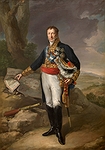
13th Duque del Infantado (1768–1841) Biographical 13th Duque del Infantado, Grandee of Spain 1790–1841† 9th Duque de Pastrana, Grandee of Spain 1790–1841† 10th Duque de Francavilla, Grandee of Spain 1790–1841† 11th Marqués de Távara, Grandee of Spain 1790–1841† 12th Marques del Cenete, Grandee of Spain 1790–1841† 21st Conde de Saldaña 1790–1841† 13th Marques de Argüeso 1790–1841† 13th Marqués de Campoo 1790–1841† 14th Marques de Santillana 1790–1841† 14th Conde del Real de Manzanares 1790–1841† 12th Conde del Cid 1790–1841† 11th Duque de Lerma 1790–1841† 11th Marques de Cea 1790–1841† 11th Conde de Ampudia 1790–1841† 10th Marqués de Algecilla 1790–1841† 9th Marques de Almenara 1790–1841† 12th Conde de Villada 1790–1841† 24th Señor de la casa de Mendoza 1790–1841† 16th Señor de Hita y Buitrago 1790–1841† 16th Señor de la casa de la Vega 1790–1841† Knight Grand Cross of the Order of Charles III 1814 [Spain] Knight of the Order of the Golden Fleece 1819 [Spain] Cross of the Lily (France) Regent of Spain 1812–13 Secretary of State President of the Council of Castile –1820 Ambassador to London 1811 Field marshal Lieutenant general 1802 Brigadier Captain-general Chief Standard-Bearer Perpetual regidor of Guadalajara Gentleman of the Chamber Governor of the Castles and Towers of León Pedro's family’s extended stays in Paris immersed him in contemporary European thought and studies, further complemented by his tutor, the renowned naturalist Antonio Cavanilles. At the age of twenty-two, he inherited the dukedom of Infantado, one of 18th-century Spain’s most prominent noble titles and estates. His youth was marked by military endeavours and involvement in textile enterprises, reflecting the Spanish aristocracy's pursuit of economic innovation. He initiated projects such as canal construction and establishing a spinning factory in Torrelavega, presiding over the Cantabrian Society. Pedro's military training saw him lead a regiment of Castilian volunteers during the War of the Pyrenees between 1793, progressively rising through the ranks. He also participated in the 1801 War of the Oranges. Closely allied with Prince Ferdinand, he supported his future reign and opposed Manuel Godoy, leading to his involvement in significant political upheavals, including the 1807 El Escorial trial and the 1808 Aranjuez events, where he backed Ferdinand VII against Carlos IV. During the Peninsular War, Pedro initially supported Ferdinand’s meeting with Napoleon in Bayonne but later opposed the monarch’s abdication, warning of Napoleon’s schemes. He commanded the Northern Army, though unsuccessfully, losing the Battle of Uclés in 1808, and his estate was confiscated under Napoleonic orders. In 1812, Pedro became president of the Regency established by the Cortes in Cádiz. That year, after the Battle of Salamanca, he issued a proclamation rallying Spaniards against the French. Cautiously navigating Ferdinand VII’s intent to revoke the Constitution, he attained significant power, serving in the Third Regency and presiding over the Council of Castile. Accused of involvement in the liberal uprising of 1820, he was exiled but returned during the Liberal Triennium to preside over a provisional Regency while Ferdinand was detained in Cádiz. With Ferdinand’s restoration, he became Prime Minister and Minister of State, proposing a reformist regulation in 1826, though he was dismissed the same year. Retreating from court politics, he eventually recognised Isabella II as Queen in 1833, aligning with the resolution of Ferdinand’s succession. Place of birth: Madrid Place of baptism: San Andrés, Madrid Place of death: San Andrés, Madrid Son of Pedro Álvarez de Toledo and Maria Anna zu Salm-Salm, he had illegitimate by Manuela Lesparre: • Manuel (see) • Sofia, legitimised in 1825, married to Francisco Valledor |
||||||||||
| |
||||||||||
|
||||||||||
| |
||||||||||
 |
||||||||||