
|
|
|
|||||||||
 |
||||||||||
| Élisabeth Vigée-Le Brun (1755–1842) | ||||||||||
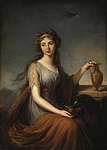
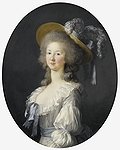
| Born in Paris, Élisabeth Vigée Le Brun was one of the most successful women artists of her time. She painted semi-allegorical subjects and many portraits of distinguished figures, fusing Rococo softness with emerging Neoclassical clarity and painting in the style of various artists, particularly Rubens and Greuze. Her father, Louis Vigée, a portrait painter, gave her her first lessons before his death in 1768. She continued her studies under Pierre Davesne and Gabriel Briard and received guidance from Joseph Vernet, Gabriel François Doyen, Jean-Baptiste Greuze, and others. To support herself and her mother, Élisabeth copied works by great masters until her mother remarried a greedy jeweller who took all her earnings. By the age of twenty, she had already gained recognition for her portraits, and her charm made her a popular figure in society. Her reputation continued to grow, and in 1779, she painted her first portrait of Marie Antoinette, whom she would portray over twenty-five times. In 1776, Élisabeth married Jean-Baptiste Pierre Le Brun, a painter and art dealer, who was the grand-nephew of Charles Le Brun. In 1783, she was admitted to the Royal Academy, a controversial decision due to her friendship with the Queen and because her husband was an art dealer, which was a disqualifying factor for women. When the Revolution broke out in 1789, she fled to Italy, working in various cities, and became a member of several academies. She continued to travel and work in other countries, painting portraits until she eventually settled permanently in Paris in 1809. Élisabeth’s salons in Paris became a hub for society until her death there. They were known for their elegance and intellectual vibrancy, attracting artists, writers, diplomats, and members of the post-Revolutionary elite. | ||||||||||
| |
||||||||||
 |
||||||||||
|
|
||||||||||
| |
||||||||||
  |
||||||||||


 Art
Art