
|
|
|
|||||||||
 |
||||||||||
| José María Velasco (1840–1912) | ||||||||||
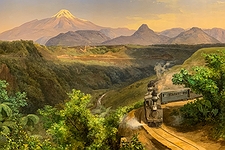
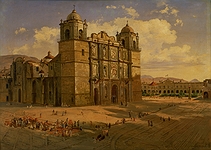
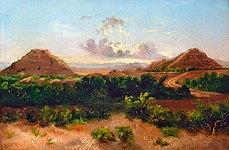
| José María Velasco was a celebrated Mexican landscape painter who played a defining role in shaping the nation's artistic identity during the 19th century. Born in Temascalcingo, Estado de México, Velasco exhibited a natural aptitude for art from a young age, leading him to enrol at the prestigious Academia de San Carlos in Mexico City at thirteen. Under the tutelage of renowned painters such as Santiago Rebull and Eugenio Landesio, he honed his skills in drawing, perspective, and composition, laying the foundation for his mastery of landscape painting. His passion for capturing the essence of the Mexican landscape blossomed during his formative years, prompting numerous expeditions across the country to sketch and study the diverse natural formations that would later inspire his masterpieces. His artistic approach was characterised by careful attention to detail, a profound understanding of light and shadow, and an unwavering commitment to depicting the grandeur and beauty of the Mexican landscape with realism. Velasco's paintings, imbued with serenity and reverence for nature, often featured iconic landmarks such as the Popocatépetl and Ixtaccíhuatl volcanoes, the Ajusco Mountains, and the Valley of Mexico. He served as a professor at the Academia de San Carlos and contributed significantly to the establishment of the Sociedad Artística Mexicana. Velasco garnered numerous accolades and recognition, cementing his legacy as one of Mexico's most revered painters. His works have been exhibited in prestigious galleries and museums worldwide, captivating audiences with their exquisite detail and profound appreciation for the nation's natural heritage. He died in Mexico City. | ||||||||||
| |
||||||||||

 |
||||||||||
|
|
||||||||||
| |
||||||||||
  |
||||||||||


 Art
Art