
|
|
|
|||||||||
 |
||||||||||
| Jacopo Tintoretto (c. 1518–1594) | ||||||||||
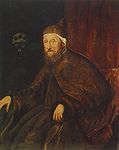
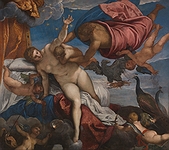
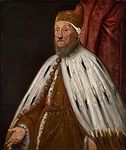
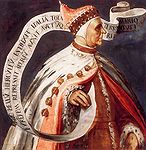
| Jacopo Robusti, known as Tintoretto, was a painter of the Mannerist movement within Venice's artistic tradition and ranks among the most significant figures of the late Renaissance. Born in Venice, the son of a dyer, and his nickname, reflecting his father’s trade, became synonymous with his artistic identity. Showing a natural inclination for art from a young age, he began sketching early, and though he briefly studied under Titian, their relationship ended when Titian, feeling threatened by Robusti’s promising talent, dismissed him. Undeterred, Robusti continued his education independently, carefully studying the works of Titian and Michelangelo, particularly the reliefs from the Medici tombs, which had a profound impact on his artistic development. Known for his bold use of chiaroscuro, he experimented with light and shadow to create dramatic contrasts, often using artificial light in his studies. He fused the rich colour techniques of Titian with the dynamic forms of Michelangelo, developing a distinctive style that was energetic, full of movement, and marked by vigorous brushwork. His rapid execution, creative boldness, and innovative approach led to his nickname 'Il Furioso'. Over the course of his prolific career, Robusti became one of the leading figures of the Venetian Renaissance, creating monumental works for churches, palaces, and public spaces. His ability to depict both the grandeur of religious subjects and the emotional complexity of human figures, combined with his unmatched mastery of light, secured his lasting influence on future generations of artists, including Velázquez. He died in Venice. | ||||||||||
| |
||||||||||


 |
||||||||||
|
|
||||||||||
| |
||||||||||
  |
||||||||||


 Art
Art