
|
|
|
|||||||||
 |
||||||||||
| Henri Rousseau (1844–1910) | ||||||||||
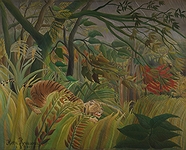
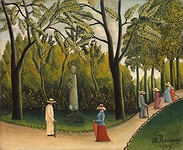
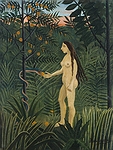
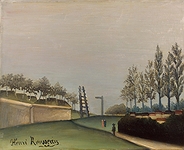
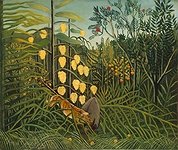
| Rousseau, born in Laval, France, in 1844, was a self-taught artist whose vivid and imaginative works broke free from the artistic norms of his time. Although he worked primarily as a toll and tax collector—earning him the nickname 'Le Douanier'—his true passion lay in art. While he often claimed that 'nature' was his only teacher, there are indications that he sought guidance from established painters like Félix Auguste Clément and Jean-Léon Gérôme. However, Rousseau's approach to learning art was far from conventional, allowing him to cultivate a unique style now recognised as Naïve or Primitive art. His paintings rejected the realism and perspective favoured by his contemporaries, instead embracing a fantastical approach with scenes of lush jungles filled with exotic animals and figures. These works were created in a childlike manner, with vibrant and often unnatural colours and flattened perspectives. Though these jungles appeared vibrant and alive, they were born entirely from his imagination, shaped by his visits to Parisian botanical gardens, zoos, and illustrations, rather than any direct experience in such environments. At first, critics mocked his work for its perceived amateurism, but over time, Rousseau's paintings gained recognition for their originality and unrestrained creativity. Modern artists, especially those linked to avant-garde movements, admired the childlike wonder and absence of artistic pretension that characterised his style. Rousseau died in Paris. | ||||||||||
| |
||||||||||


 |
||||||||||
|
|
||||||||||
| |
||||||||||
  |
||||||||||


 Art
Art