
|
|
|
|||||||||
 |
||||||||||
| Pierre-Auguste Renoir (1841–1919) | ||||||||||
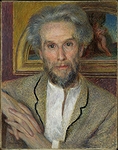
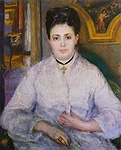
| Born in Limoges, Renoir’s style initially flourished within the Impressionist movement, where he embraced vibrant colour, light, and spontaneous brushwork to capture the immediacy of everyday life. His early training was practical and disciplined: beginning as an apprentice in a porcelain factory painting floral designs, he later studied drawing and anatomy at the École des Beaux-Arts and under Charles Gleyre, whose academic approach provided a solid technical foundation despite Renoir’s preference for freer expression. Early in his career, Renoir was greatly influenced by fellow students and Impressionists such as Claude Monet, Alfred Sisley, and Frédéric Bazille, sharing their ambition to paint directly from nature and reject the constraints of academic tradition. His early works, marked by shimmering light and multicoloured brushstrokes, stood out for their focus on the human figure, especially women, distinguishing him from other Impressionists more concerned with landscapes. Despite initial rejection and criticism from the conservative Salon juries, Renoir gained recognition among progressive critics and patrons who appreciated his vitality and joy in portraying life’s pleasures. By the mid-1880s, however, he began to question the limits of Impressionism. Influenced by classical masters such as Raphael and Ingres, he adopted a more disciplined technique that emphasised form, volume, and line, often reintroducing black for contrast. This change, sometimes called his 'Ingres period', met with mixed reception, as some viewed it as a departure from Impressionism’s spontaneity. Yet Renoir continued to refine a style that balanced classical structure with the luminous colour and vitality that defined his early years. His later works, inspired by the southern French light, combined sensuality and warmth with formal elegance, ultimately winning broader acceptance and securing his reputation as a master who bridged tradition and innovation. Renoir died in Cagnes. | ||||||||||
. |
||||||||||
| |
||||||||||





 |
||||||||||
| |
||||||||||
  |
||||||||||


 Art
Art