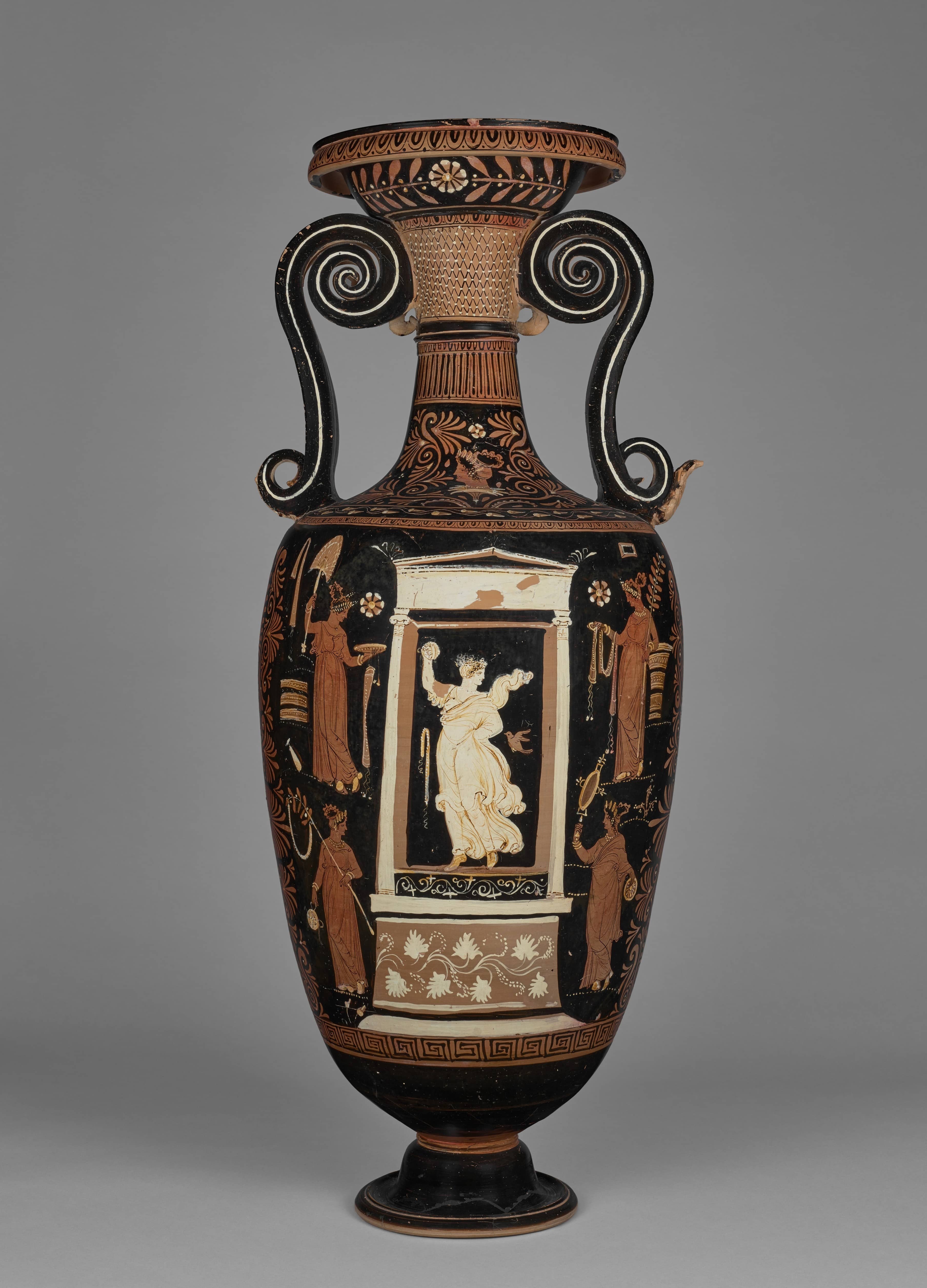
On the reverse of this loutrophoros
is a funerary scene: a naiskos, or grave monument, frames a
young woman—presumed to be the deceased—holding a ball of thread,
while visitors approach bearing offerings. The clearly funerary
context gives reason to reconsider the Zeus and Leda scene on the
front, which may serve as more than a mythological tableau; it could
be engaging with ideas of transition and mortality. In Apulian
vase-painting, scenes of divine abduction or seduction are often
used as symbolic responses to death, offering consolation through
myth. The presence of Eleusis further deepens this reading, her
connection to rites promising a blessed afterlife reinforcing the
vessel’s role in mourning and remembrance.