|
|
|
|||||||||
 |
||||||||||
| Tommy McRae (c. 1836–1901) | ||||||||||
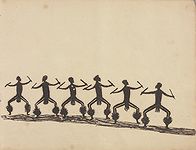
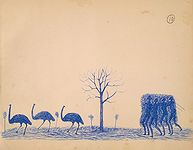
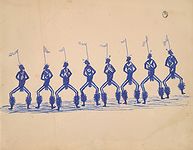
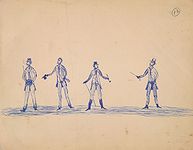
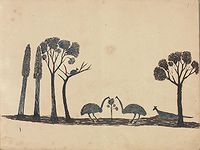
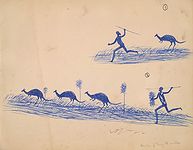
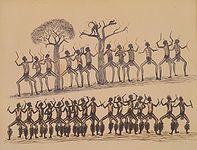
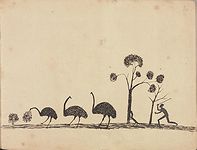
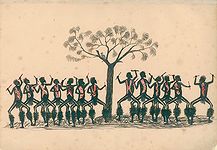
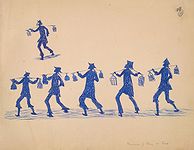
| Tommy McRae, also known as Tommy Barnes, Yackaduna, and Warra-euea, was an Australian Aboriginal artist born near the Goulburn River in Victoria. Raised in a traditional Indigenous setting, his way of life was soon disrupted by European settlers, and many of his people were relocated to missions. However, McRae resisted giving up his land, establishing a small, thriving independent community in opposition to the settlers. In the 1880s, he moved to Wahgunyah, where, under the patronage of Canadian telegraph master Roderick Kilborn, he worked various jobs to support his family while selling books of his pen-and-ink drawings. McRae gained recognition as an artist, sought after by travellers, which significantly improved his financial situation. His works, unique in their style—neither strictly Aboriginal nor European—offer a broad portrayal of early Indigenous culture and the impact of European settlement. They depict Indigenous customs such as fishing, hunting, and ceremonies, with some featuring landscapes, Chinese settlers, animals, and squatters, often rendered as silhouettes. McRae focused on his people in the centre of his works, with European settlers relegated to the edges. He continued drawing and selling his art into the 1890s, and some of his works were included in K. Langloh Parker's Australian Legendary Tales, published in 1896. McRae died in Wahgunyah. | ||||||||||
| |
||||||||||
|
|
||||||||||
| |
||||||||||
 |
||||||||||


 Art
Art