
|
|
|
|||||||||
 |
||||||||||
| Antonio Mancini (1852–1930) | ||||||||||
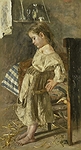
| Mancini was a leading Verismo portrait and genre painter, recognised as a key figure in late-19th century Italian art. Born in Rome, his family moved to Narni, Umbria, where he began his education with the Piarists. His artistic talent led his father to send him to study with a local decorator. In 1865, the family moved to Naples, where Mancini began formal training at the Oratory of the Girolamini and evening classes at San Domenico Maggiore, meeting sculptor Vincenzo Gemito. He also studied at the Academy of Fine Arts of Naples under Raffaele Postiglione and Federico Maldarelli, later continuing his studies with Domenico Morelli, who influenced Mancini's anti-academic approach and emphasis on formal values. Mancini was encouraged to study Neapolitan painting, which deepened his understanding of naturalism. Early on, he painted in the style of Caravaggio and Velázquez, depicting lower-class life with sensitivity. His own difficult youth in Naples helped him relate to his subjects, particularly street boys, as seen in his first recorded work, Scugnizzo. Later, influenced by Mariano Fortuny, Mancini adopted a richer colour palette. He moved to Paris in 1875, meeting Manet and Degas, who impacted his colour and impasto techniques, although he remained committed to Italian naturalism. Mancini painted portraits in London with the patronage of John Singer Sargent before returning to Rome in 1883 due to mental health issues. He remained active in Rome and Naples, continuing to travel across Europe. He achieved recognition for his unique style and died in Rome. | ||||||||||
| |
||||||||||

 |
||||||||||
|
|
||||||||||
| |
||||||||||
  |
||||||||||


 Art
Art