
|
|
|
|||||||||
 |
||||||||||
 |
||||||||||
 |
||||||||||
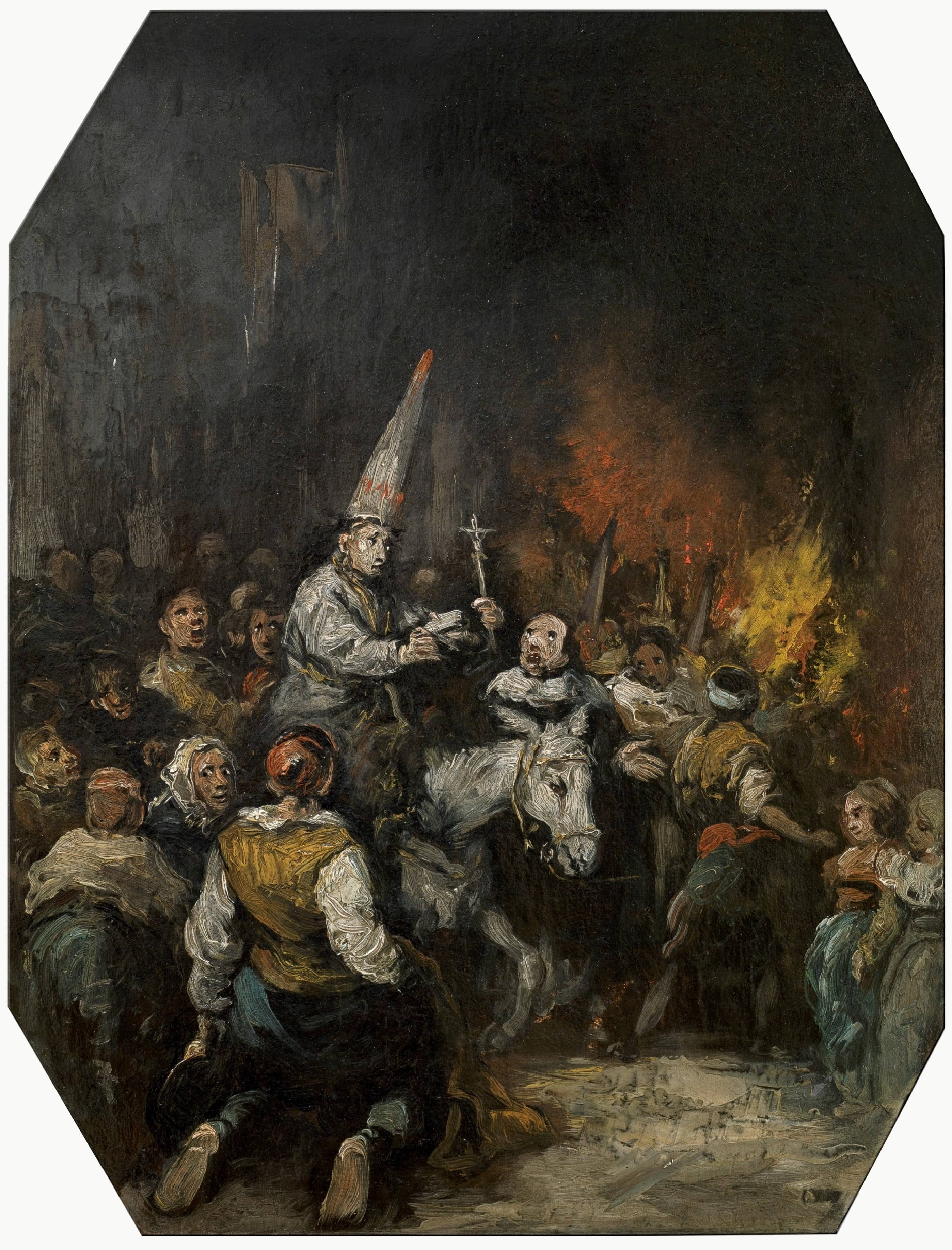
Man condemned by the Inquisition Oil on canvas, 51 x 41 cm, by Eugenio Lucas Velázquez, 1870 Museo el Prado, Madrid |
||||||||||
| The sombre, oppressive air of the painting is thick with the weight of injustice. A man, shrouded in the humiliating garb of the condemned, rides a donkey through a narrow street, his face a mask of despair. The sanbenito, a conical hat and tunic emblazoned with symbols of his supposed sins, marks him as a victim of the Inquisition’s cruel theatre. His posture, hunched and resigned, suggests that he knows resistance is futile. The crowd presses in, their expressions twisted in jeering delight or frenzied hostility, their mouths open in mockery or curses. Flickering torchlight casts grotesque shadows, illuminating the stark contrast between the condemned man’s pallor and the inflamed zeal of those around him. The night is alive with movement—figures surge forward, flames claw at the sky, and the restless energy of the mob crackles through the air. Lucas Velázquez channels the spirit of Goya in this fevered vision of religious persecution. His impassioned brushwork, thick and gestural, lends a feverish intensity to the scene, blurring the line between individual and mob, justice and vengeance. Though the Inquisition had been abolished by the time he painted, Lucas resurrects its horrors with chilling immediacy, drawing from history, imagination, and the lingering spectres of a brutal past. |
||||||||||
 |
||||||||||


